

Investigation · Original reporting
Venezuela 2026: The Post-Maduro Power Structure
Who appoints whom in Venezuela in 2026, according to official gazettes, the laws and the UN
AI-generated illustration (Google Flow) for Venezuela Record.
The reorganization of power in Venezuela during 2026 raises a question that goes beyond the change of authorities: which security and intelligence structures remain, who holds their command powers and which mechanisms of control and political persecution are still operating. What really changed in Venezuela? The official gazettes and the reports of international bodies show the institutional reality as of October 2026.
Original idea and methodological design: Minerva Mendoza Paipa. Research and editing: Venezuela Record.
One line, two paths. From the day Maduro was captured, the country moved in two directions at once.
3 January 2026
The departure of Nicolás Maduro opened a new stage of economic and political reorganization in Venezuela. The oil legislation was reformed and the agreements with the United States moved forward. The official gazettes, however, reveal another dimension of the change: Delcy Rodríguez, who had previously countersigned rules on security and state control, took over the presidential power to appoint the heads of military counterintelligence. The decrees of January and March 2026 show who kept the authority to run the institutions historically linked to political repression.
The economy changed
In January a new Hydrocarbons Law was passed.In April ties with the IMF and the World Bank were restored.In August a 25-year oil agreement was signed with the United States.The economic turn was visible, fast and documented.
The structure of control and security remains
On 6 January and 18 March 2026, Delcy Rodríguez signed the decrees appointing the directors of military counterintelligence (DGCIM). The UN documented that SEBIN and the DGCIM kept operating under the same structures and rules. The anti-hate law remained in force and, as of 14 September, Foro Penal counted 344 political prisoners.
The United Nations warning
On the direction of the U.S. plan for Venezuela in 2026
“prioritized economic and commercial interests over democratic reform or human rights considerations”
The Independent International Fact-Finding Mission on Venezuela examined this direction in the report it presented to the Human Rights Council in September 2026.
On SEBIN and the DGCIM
“continue to operate under the same structures and with the same rules”
The signature
The same signature, a new position of command
The official gazettes make it possible to reconstruct a path of institutional power. Between 2015 and 2024, Delcy Rodríguez countersigned, from different posts in the Executive, rules that regulate counterintelligence bodies, structures of territorial organization and security mechanisms. In January 2026 her signature appears in a different position: as acting president, directly exercising the power to appoint the director of military counterintelligence. In March she exercises that power again. Her powers changed; the continuity of her role in these decisions is documented.
Institutional continuity does not always mean that the same people keep the same posts. It can also show when an official acquires new powers within structures they already knew and whose regulation they had helped shape.
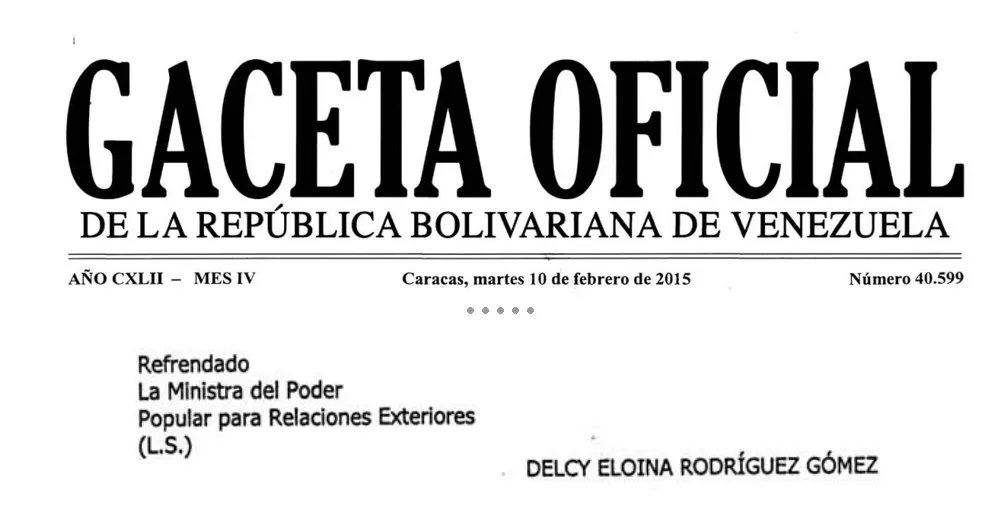
2015. Organic Regulation of the DGCIM (Decree 1,605)
Official Gazette No. 40,599 · 10 February 2015
Posts in this signature
- Minister of Foreign Affairs
The documentary origin of an institutional continuity
Delcy Rodríguez countersigned Decree 1,605, which issued the Organic Regulation of the Directorate General of Military Counterintelligence (DGCIM). Its article 6 gives the President of the Republic, as Commander in Chief, the power to appoint the agency’s director (“is appointed by the President … and Commander in Chief”). Eleven years later her signature is again tied to that power, now from the acting presidency. The relationship between both decisions makes it possible to examine the continuity of institutional power.27
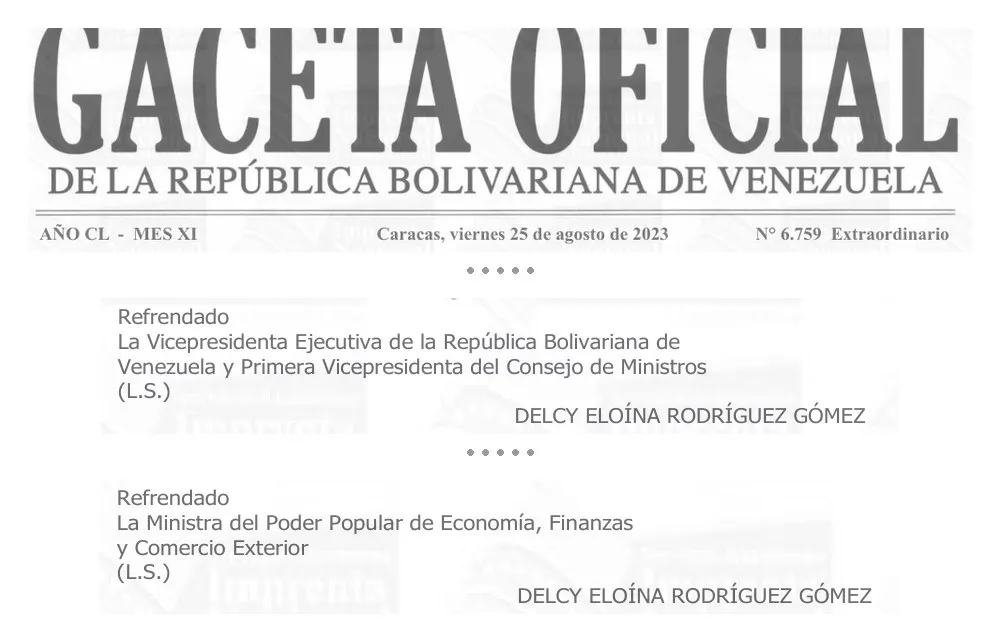
2023. Reform of the Organic Law of Communal Councils
Official Gazette No. 6,759 Extraordinary · 25 August 2023
Posts in this signature
- Executive Vice President
- Minister of Economy, Finance and Foreign Trade
State security is linked to community organization
The reform orders each communal council to contribute to security and the integral defense of the Nation “jointly with the Bolivarian Militia” (art. 24.8). Delcy Rodríguez countersigns it from two posts in the Executive. The document shows an institutional link between community organization and State security functions that matters for examining the territorial structure of power. Reprinted “due to material error”; first published in No. 6,749 Extraordinary on 26 June 2023, with the same signatures.3233
2024. Liberator Simón Bolívar Organic Law (“against the imperialist blockade”)
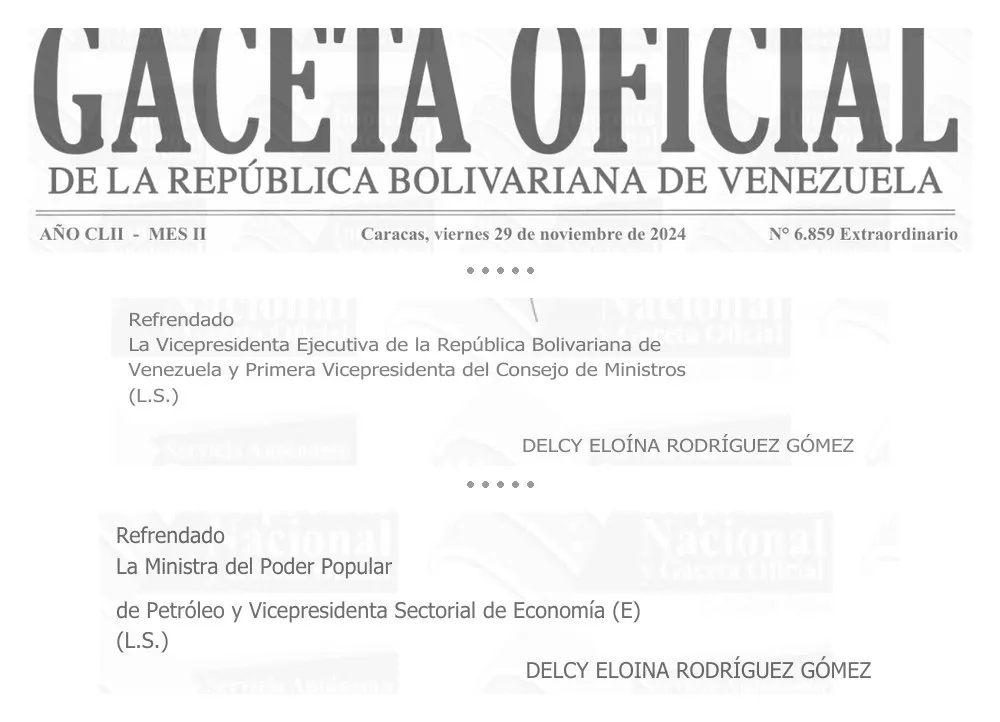
Official Gazette No. 6,859 Extraordinary · 29 November 2024
Posts in this signature
- Executive Vice President
- Minister of Oil and Sectoral Vice President for the Economy (acting)
The power to punish: prison and political disqualification
The law sets prison terms of 25 to 30 years for conduct related to promoting, supporting or taking part in international coercive measures against Venezuela (art. 11) and political disqualification for up to 60 years as an accessory penalty (art. 13). Delcy Rodríguez countersigns it from two posts in the Executive, along with other officials, among them Diosdado Cabello and Vladimir Padrino López. The document shows her formal participation in approving a legal framework that expands the State’s sanctioning tools. Acceso a la Justicia warns that the 60-year disqualification is in practice a lifetime ban and that the registry in article 23 is a list of suspects that violates the presumption of innocence.3455
2024. Reform of the Organic Law of Communes
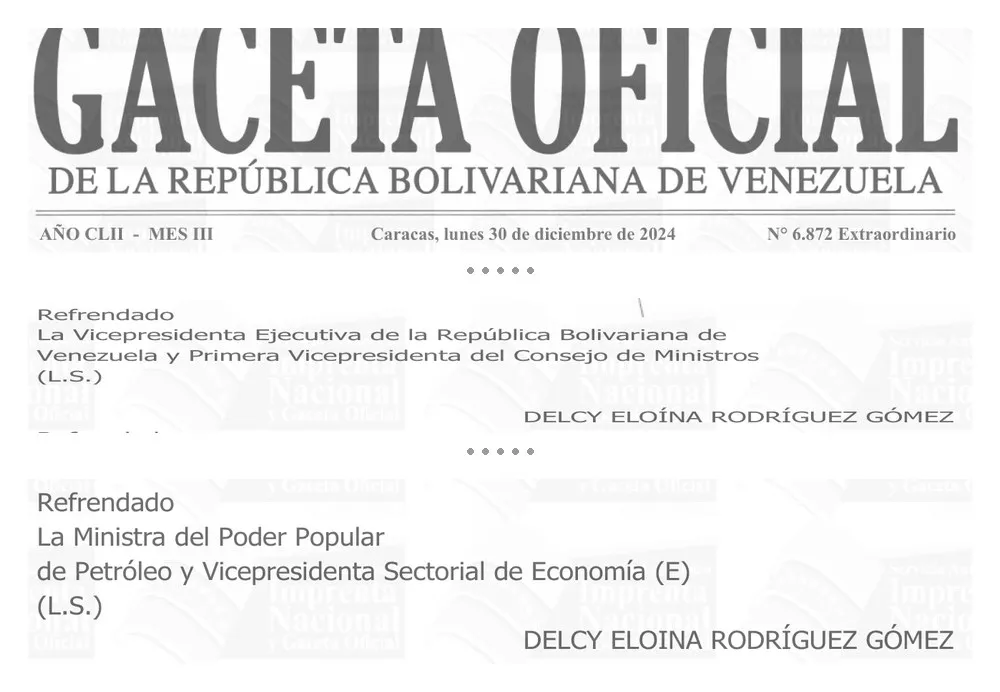
Official Gazette No. 6,872 Extraordinary · 30 December 2024
Posts in this signature
- Executive Vice President
- Minister of Oil and Sectoral Vice President for the Economy (acting)
State security is linked to communal power
The reform adds a Security and Peace Commission to the governing structure of the communes and gives it security and integral defense functions together with the Bolivarian Militia (arts. 42 and 43.2); it also creates communal justices of the peace. Delcy Rodríguez again countersigns the law from two posts in the Executive, as do Cabello and Padrino López. The rule thus documents an institutional link between the territorial organization of communities and State security functions.35
2026. Decree 5,203: appointment of the DGCIM director
Official Gazette No. 6,957 Extraordinary · 6 January 2026
Signed alone, no countersignatures
- Acting President of the Republic
From countersigning to appointing
One day after taking the oath, she signs alone, with no countersignature: “I appoint General-in-Chief Gustavo Enrique González López” as head of military counterintelligence. The appointed authority now appoints, using the power set out in the 2015 regulation she countersigned.263
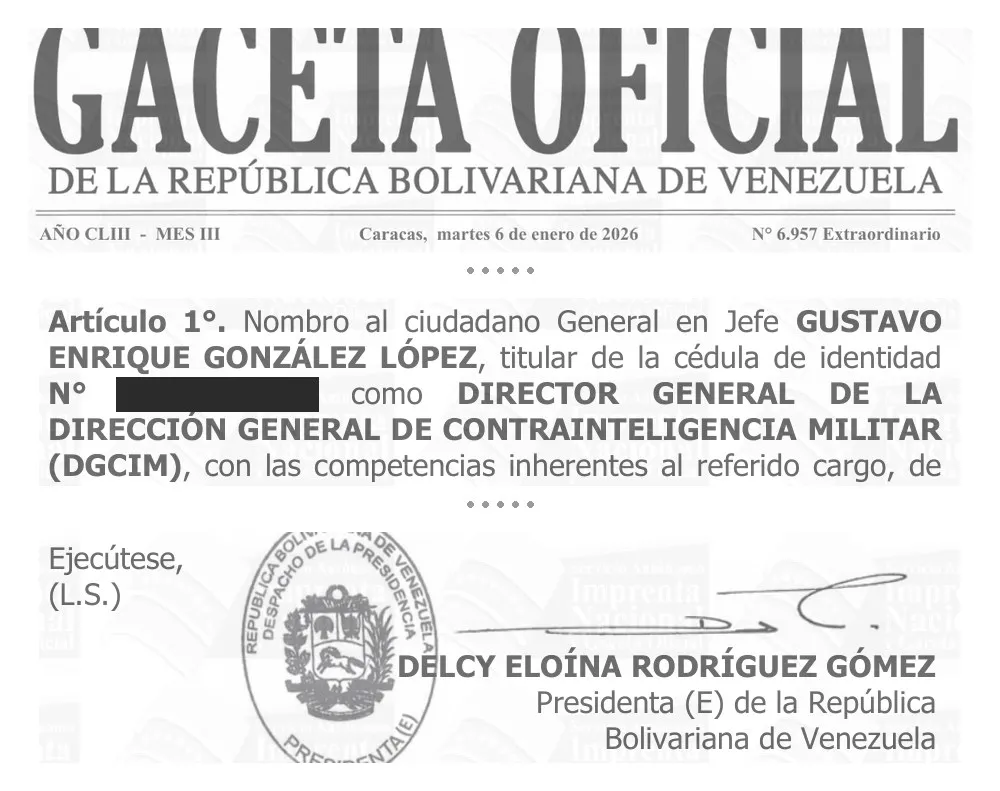 Signed alone, no countersignatures
2026. Decree 5,284: a new DGCIM director
Official Gazette No. 7,006 Extraordinary · 18 March 2026
Signed alone, no countersignatures
- Acting President of the Republic
The directors change; the command structure remains
On 18 March 2026 Delcy Rodríguez appointed Germán Edoardo Gómez Lárez director of the DGCIM (“I appoint …”), with the same formula and the same single signature. That same day, by Decree 5,277, she named Gustavo González López, whom she had appointed head of military counterintelligence on 6 January, as Minister of Defense. Both appointments document a reorganization of the security and defense authorities under the exercise of the same presidential power of appointment.375667
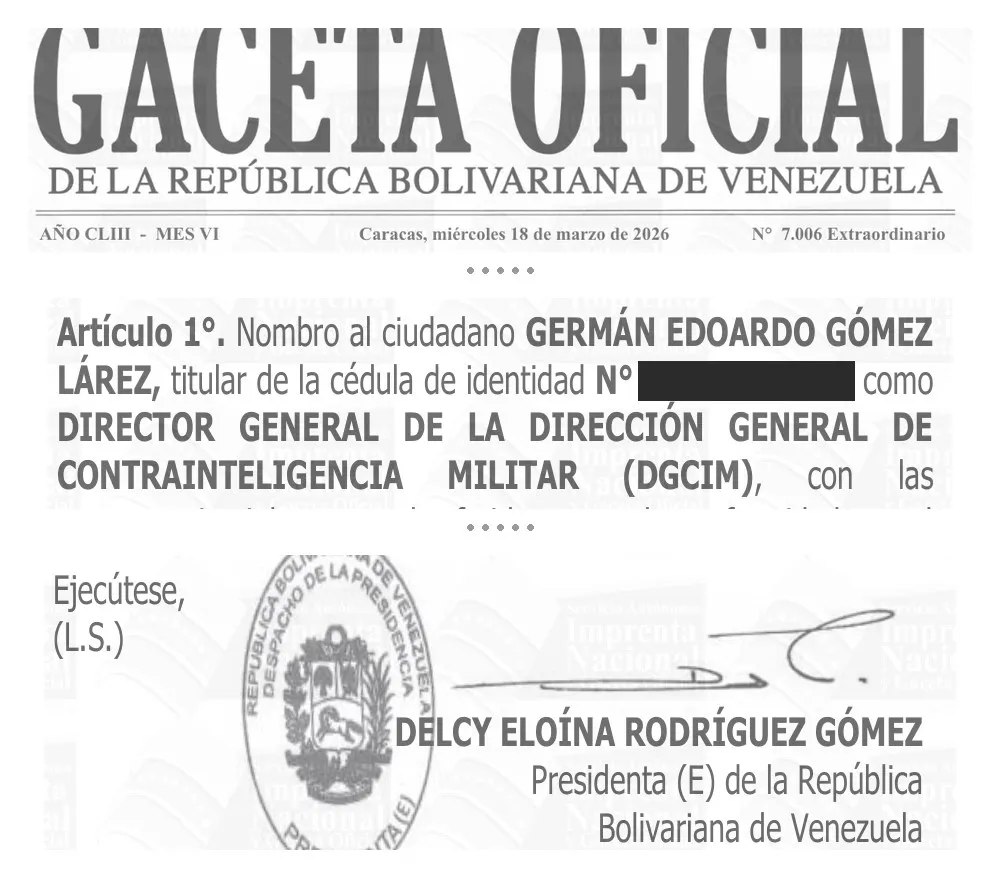 Signed alone, no countersignatures
The posts changed. The power structure calls for another reading.
Six official gazettes published between 2015 and 2026 reconstruct an institutional continuity that goes beyond the succession of authorities. Delcy Rodríguez’s signature first appears countersigning rules tied to military counterintelligence, territorial organization, security and the State’s sanctioning powers. Eleven years later it appears exercising the presidential authority to appoint those who run the DGCIM.
The names and positions of command changed. The institutional powers that make it possible to run these agencies remained. This documentary sequence shows who took part in their legal design and who currently holds the power of appointment. To establish the reach of that continuity over practices of control and political persecution, we must also examine how those institutions operate and which of their actions have been documented.
The true dimension of political change cannot be measured only by who leaves power or who takes over its leadership. It must also be examined in the structures that survive that transition, the powers they keep and the effective guarantees that limit their exercise.
Org chart
The architecture of post-Maduro power
Who decides, who appoints and who holds command
This org chart reconstructs the relationships that explain how power was exercised in 2026: court rulings, powers of appointment, institutional hierarchies, political ties and documented relationships of influence. Each connection rests on an identifiable source, and not all of them carry the same degree of authority.
Follow the four guided steps, or switch to free mode and open any profile. Each line says what kind of link it is and where it comes from.
Step 1 of 4
The origin of the new leadership of the State
Nicolás Maduro’s departure on 3 January 2026 opened a presidential succession decided institutionally by the Supreme Court, which ordered the executive vice president to take over the presidency. Delcy Rodríguez became acting president, while the National Assembly remained under the presidency of Jorge Rodríguez, her brother. At the same time, the United States gained a decisive influence over the direction of the new political and economic stage, whose extent has been examined by the United Nations.
The result is a power structure that must be understood through its effective relationships: who confers authority, who appoints officials, who exercises command and which links connect the top decisions with the security institutions and their actions.
- Supreme Court (TSJ) → Delcy Rodríguez: Names her acting president (Jan 2026) (Appointment)281
- U.S. government → Delcy Rodríguez: Documented political influence: major decisions “instigated, authorized or approved” by Washington (UN, para. 16). It gives the U.S. no legal power to appoint Venezuelan officials (De facto link documented by the UN)1
- Delcy Rodríguez — Jorge Rodríguez: Siblings (Family tie)140
- Jorge Rodríguez → Supreme Court (TSJ): The National Assembly he presides has the power to elect the justices, and in May it expanded the court. Presiding over the Assembly is not personal hierarchical command over the court (Institutional coordination)14
Step 2 of 4
Who holds the power to appoint
The reorganization of Venezuela’s security apparatus in 2026 shows how the acting presidency used its powers of appointment over strategic State institutions. On 6 January, Delcy Rodríguez appointed Gustavo González López director of the DGCIM. On 18 March she named him Minister of Defense and put Germán Edoardo Gómez Lárez at the head of military counterintelligence. She kept Diosdado Cabello at Interior; SEBIN, headed at least until March by his cousin Alexis Rodríguez Cabello, belongs to the Vice Presidency she still holds.
These moves changed who holds the posts without showing, by themselves, any transformation of the powers, structures or ways of working of the agencies involved. The question this documentary sequence raises goes beyond the appointments: who keeps the power of command over institutions that international bodies have linked to human rights violations, and what effective controls exist over the use of that power.
Key decrees
Key ideaThe appointments reveal who exercises authority. The permanence of the structures makes it possible to examine what institutional capacity the State keeps.
- Delcy Rodríguez → Gustavo González López: DGCIM (Decree 5,203, 6 Jan) and Defense (Decree 5,277, 18 Mar) (Appointment)26567
- Delcy Rodríguez → Germán Gómez Lárez: DGCIM director (Decree 5,284, 18 Mar) (Appointment)376
- Delcy Rodríguez → Diosdado Cabello: Keeps him at Interior (Legal or institutional command)10
- Delcy Rodríguez → Alexis Rodríguez Cabello: SEBIN belongs to the Vice Presidency she still holds (Legal or institutional command)2530
- Diosdado Cabello — Alexis Rodríguez Cabello: Cousins (Family tie)10
Step 3 of 4
From central command to territorial control
The organization of State power takes on a territorial dimension through the agencies in charge of security, intelligence and defense.
The Interior Ministry has powers over the national police forces and governs the police service. The Defense Ministry holds the military chain of command, while the law ties the Bolivarian Militia to communal councils and communes in security and defense activities.
To this formal organization the United Nations adds documented de facto links between colectivos, State authorities and security agencies. The coexistence of legal powers and informal ties calls for examining how those relationships work, who takes part in the actions and what responsibility belongs to each institution.
The territorial dimension of power helps explain how decisions taken by the central authorities can turn into concrete actions against the population. Determining when those actions amount to political persecution requires identifying the facts, those responsible, the people affected and the documented motivations.
Interior Ministry
Diosdado Cabello
- ColectivosDe facto links with police and intelligence documented by the UN (paras. 93–96)1
- Communal councils and communesSecurity and defense tasks set by law, jointly with the Militia3235
Documented actions against people perceived as opponents (step 4)
Key ideaInstitutional command establishes who holds authority. Documented actions show how it is exercised.
- Diosdado Cabello → Douglas Rico: Reports to Interior (Legal or institutional command)10
- Diosdado Cabello → National Police (PNB): Reports to Interior (Legal or institutional command)10
- Diosdado Cabello → State police forces: Governing body of the police service (Institutional coordination)39
- Diosdado Cabello → Colectivos: Public backing (UN, para. 101) (De facto link documented by the UN)1
- Gustavo González López → Armed Forces · National Guard · Militia: Defense Ministry (Legal or institutional command)7
- State governments → State police forces: Each state runs its force (Legal or institutional command)39
- Armed Forces · National Guard · Militia → Communal councils and communes: Security commissions + Militia (Institutional coordination)3235
- Colectivos → Communal councils and communes: Participate in or control councils (UN, para. 93) (De facto link documented by the UN)1
- Colectivos → National Police (PNB): Act with police (UN, paras. 89, 96) (De facto link documented by the UN)1
Step 4 of 4
Political opinion under persecution
Political persecution takes a concrete shape when we look at what happens to people who criticize the government or whom the authorities identify as opponents. The question is not limited to whether detentions occur: it covers the reasons behind them, the agencies involved and their consequences for the exercise of political rights.
In January 2026, SEBIN detained Yorman Acevedo over a TikTok comment about Maduro’s capture; he was accused of “incitement to hatred.” He was released on 26 September; the conditions were not disclosed.
In September, Javier Oropeza, a former mayor and opposition leader, was detained 48 hours after returning to Venezuela from more than two years in exile, even though the day before he had obtained the dismissal of his case under the Amnesty Law. He was released some six hours later, with precautionary measures according to the opposition.
These cases make it possible to examine State actions, after Maduro’s departure, against people identified by their expression or political record. The United Nations also documented, as a notable new pattern, short-term arbitrary detentions and measures of intimidation against people perceived as opponents (para. 61).
The permanence of the security structures thus matters beyond the org charts: their actions can directly affect freedom of expression, political participation and the safety of those who question power.
Key ideaPersecution for political opinion does not require holding an opposition post. It can also reach anyone who voices public criticism or is identified as opposed to those in power.
- Colectivos → National Police (PNB): Act with police (UN, paras. 89, 96) (De facto link documented by the UN)1
- Colectivos → Alexis Rodríguez Cabello: Collaborate with State intelligence services (UN, para. 94; it does not say which) (De facto link documented by the UN)1
- Supreme Court (TSJ) → Courts and Public Prosecutor’s Office: Top of the judiciary (Legal or institutional command)1
- Alexis Rodríguez Cabello → Those who dissent: Detained Yorman Acevedo (Jan 2026; released 26 Sep) (Documented action)1642
- National Police (PNB) → Those who dissent: Detained Javier Oropeza, per El Pitazo and the opposition (Sep 2026; other outlets say SEBIN) (Documented action)184419
- Courts and Public Prosecutor’s Office → Those who dissent: Apply the anti-hate law (UN, para. 41) (Documented action)1
- Colectivos → Those who dissent: Act alongside security forces in times of unrest (UN, para. 96) (Documented action)1
Tap or click any person or institution to light up its connections and open its profile.
Step 1 of 4
Step 1 of 4
The origin of the new leadership of the State
Nicolás Maduro’s departure on 3 January 2026 opened a presidential succession decided institutionally by the Supreme Court, which ordered the executive vice president to take over the presidency. Delcy Rodríguez became acting president, while the National Assembly remained under the presidency of Jorge Rodríguez, her brother. At the same time, the United States gained a decisive influence over the direction of the new political and economic stage, whose extent has been examined by the United Nations.
The result is a power structure that must be understood through its effective relationships: who confers authority, who appoints officials, who exercises command and which links connect the top decisions with the security institutions and their actions.


- Supreme Court (TSJ) → Delcy RodríguezAppointment · Names her acting president (Jan 2026)281
- U.S. government → Delcy RodríguezDe facto link documented by the UN · Documented political influence: major decisions “instigated, authorized or approved” by Washington (UN, para. 16). It gives the U.S. no legal power to appoint Venezuelan officials1
- Delcy Rodríguez — Jorge RodríguezFamily tie · Siblings140
- Jorge Rodríguez → Supreme Court (TSJ)Institutional coordination · The National Assembly he presides has the power to elect the justices, and in May it expanded the court. Presiding over the Assembly is not personal hierarchical command over the court14
Step 2 of 4
Who holds the power to appoint
The reorganization of Venezuela’s security apparatus in 2026 shows how the acting presidency used its powers of appointment over strategic State institutions. On 6 January, Delcy Rodríguez appointed Gustavo González López director of the DGCIM. On 18 March she named him Minister of Defense and put Germán Edoardo Gómez Lárez at the head of military counterintelligence. She kept Diosdado Cabello at Interior; SEBIN, headed at least until March by his cousin Alexis Rodríguez Cabello, belongs to the Vice Presidency she still holds.
These moves changed who holds the posts without showing, by themselves, any transformation of the powers, structures or ways of working of the agencies involved. The question this documentary sequence raises goes beyond the appointments: who keeps the power of command over institutions that international bodies have linked to human rights violations, and what effective controls exist over the use of that power.


- Delcy Rodríguez → Gustavo González LópezAppointment · DGCIM (Decree 5,203, 6 Jan) and Defense (Decree 5,277, 18 Mar)26567
- Delcy Rodríguez → Germán Gómez LárezAppointment · DGCIM director (Decree 5,284, 18 Mar)376
- Delcy Rodríguez → Diosdado CabelloLegal or institutional command · Keeps him at Interior10
- Delcy Rodríguez → Alexis Rodríguez CabelloLegal or institutional command · SEBIN belongs to the Vice Presidency she still holds2530
- Diosdado Cabello — Alexis Rodríguez CabelloFamily tie · Cousins10
Key ideaThe appointments reveal who exercises authority. The permanence of the structures makes it possible to examine what institutional capacity the State keeps.
Step 3 of 4
From central command to territorial control
The organization of State power takes on a territorial dimension through the agencies in charge of security, intelligence and defense.
The Interior Ministry has powers over the national police forces and governs the police service. The Defense Ministry holds the military chain of command, while the law ties the Bolivarian Militia to communal councils and communes in security and defense activities.
To this formal organization the United Nations adds documented de facto links between colectivos, State authorities and security agencies. The coexistence of legal powers and informal ties calls for examining how those relationships work, who takes part in the actions and what responsibility belongs to each institution.
The territorial dimension of power helps explain how decisions taken by the central authorities can turn into concrete actions against the population. Determining when those actions amount to political persecution requires identifying the facts, those responsible, the people affected and the documented motivations.



- Diosdado Cabello → Douglas RicoLegal or institutional command · Reports to Interior10
- Diosdado Cabello → National Police (PNB)Legal or institutional command · Reports to Interior10
- Diosdado Cabello → State police forcesInstitutional coordination · Governing body of the police service39
- Diosdado Cabello → ColectivosDe facto link documented by the UN · Public backing (UN, para. 101)1
- Gustavo González López → Armed Forces · National Guard · MilitiaLegal or institutional command · Defense Ministry7
- State governments → State police forcesLegal or institutional command · Each state runs its force39
- Armed Forces · National Guard · Militia → Communal councils and communesInstitutional coordination · Security commissions + Militia3235
- Colectivos → Communal councils and communesDe facto link documented by the UN · Participate in or control councils (UN, para. 93)1
- Colectivos → National Police (PNB)De facto link documented by the UN · Act with police (UN, paras. 89, 96)1
Key ideaInstitutional command establishes who holds authority. Documented actions show how it is exercised.
Step 4 of 4
Political opinion under persecution
Political persecution takes a concrete shape when we look at what happens to people who criticize the government or whom the authorities identify as opponents. The question is not limited to whether detentions occur: it covers the reasons behind them, the agencies involved and their consequences for the exercise of political rights.
In January 2026, SEBIN detained Yorman Acevedo over a TikTok comment about Maduro’s capture; he was accused of “incitement to hatred.” He was released on 26 September; the conditions were not disclosed.
In September, Javier Oropeza, a former mayor and opposition leader, was detained 48 hours after returning to Venezuela from more than two years in exile, even though the day before he had obtained the dismissal of his case under the Amnesty Law. He was released some six hours later, with precautionary measures according to the opposition.
These cases make it possible to examine State actions, after Maduro’s departure, against people identified by their expression or political record. The United Nations also documented, as a notable new pattern, short-term arbitrary detentions and measures of intimidation against people perceived as opponents (para. 61).
The permanence of the security structures thus matters beyond the org charts: their actions can directly affect freedom of expression, political participation and the safety of those who question power.


- Colectivos → National Police (PNB)De facto link documented by the UN · Act with police (UN, paras. 89, 96)1
- Colectivos → Alexis Rodríguez CabelloDe facto link documented by the UN · Collaborate with State intelligence services (UN, para. 94; it does not say which)1
- Supreme Court (TSJ) → Courts and Public Prosecutor’s OfficeLegal or institutional command · Top of the judiciary1
- Alexis Rodríguez Cabello → Those who dissentDocumented action · Detained Yorman Acevedo (Jan 2026; released 26 Sep)1642
- National Police (PNB) → Those who dissentDocumented action · Detained Javier Oropeza, per El Pitazo and the opposition (Sep 2026; other outlets say SEBIN)184419
- Courts and Public Prosecutor’s Office → Those who dissentDocumented action · Apply the anti-hate law (UN, para. 41)1
- Colectivos → Those who dissentDocumented action · Act alongside security forces in times of unrest (UN, para. 96)1
Key ideaPersecution for political opinion does not require holding an opposition post. It can also reach anyone who voices public criticism or is identified as opposed to those in power.
0 Origin
- U.S. governmentPlan of “stability, recovery, transition”
U.S. government
Plan of “stability, recovery, transition”
Great Seal of the United States · public domain, via Wikimedia Commons
Appoints / commands
- Delcy Rodríguez: Documented political influence: major decisions “instigated, authorized or approved” by Washington (UN, para. 16). It gives the U.S. no legal power to appoint Venezuelan officials (De facto link documented by the UN)1
What the record shows
- According to the UN mission, the U.S. plan for Venezuela “prioritized economic and commercial interests over democratic reform or human rights considerations” (para. 16).1
- The UN reports that “all major political, economic and security decisions in the country are being instigated, authorized or approved by the Government of the United States” (para. 16).1
- Supreme Court (TSJ)Named the acting president on 3 Jan 2026
Supreme Court (TSJ)
Named the acting president on 3 Jan 2026
Logo: Supreme Court of Justice · public domain, via Wikimedia Commons
Appointed by / answers to
- Jorge Rodríguez: The National Assembly he presides has the power to elect the justices, and in May it expanded the court. Presiding over the Assembly is not personal hierarchical command over the court (Institutional coordination)14
Appoints / commands
- Delcy Rodríguez: Names her acting president (Jan 2026) (Appointment)281
- Courts and Public Prosecutor’s Office: Top of the judiciary (Legal or institutional command)1
What the record shows
- Ruling No. 1 of the Constitutional Chamber (3 Jan 2026), issued “ex officio”, ordered the executive vice president to “assume and exercise” the presidency “as acting president”, with no time limit.2829
- Acceso a la Justicia argues that the Constitution gives the court no power to order this.28
- In April–May 2026, eight justices were retired and the National Assembly expanded the court from 20 to 32 seats; the UN warns of a risk of political influence (para. 47).114



1 Leadership
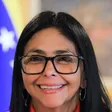
- Delcy RodríguezActing President
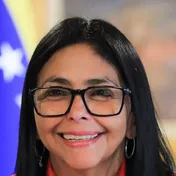
Delcy Rodríguez
Acting President since 5 Jan 2026 · still Executive Vice President
Photo: Presidency of Venezuela, 19 Jan 2026 · public domain, via Wikimedia Commons
Appointed by / answers to
- Supreme Court (TSJ): Names her acting president (Jan 2026) (Appointment)281
- U.S. government: Documented political influence: major decisions “instigated, authorized or approved” by Washington (UN, para. 16). It gives the U.S. no legal power to appoint Venezuelan officials (De facto link documented by the UN)1
Appoints / commands
- Gustavo González López: DGCIM (Decree 5,203, 6 Jan) and Defense (Decree 5,277, 18 Mar) (Appointment)26567
- Germán Gómez Lárez: DGCIM director (Decree 5,284, 18 Mar) (Appointment)376
- Diosdado Cabello: Keeps him at Interior (Legal or institutional command)10
- Alexis Rodríguez Cabello: SEBIN belongs to the Vice Presidency she still holds (Legal or institutional command)2530
Links
What the record shows
- Sworn in as acting president on 5 January 2026, after the Supreme Court ruling (UN, para. 17).128
- She has not appointed an executive vice president (no appointment had been reported as of 13 October 2026). As lawyer Nelson Chitty La Roche told Efecto Cocuyo, under the 3 January ruling she “is still the vice president but is also the acting president.” SEBIN is a body of the Vice Presidency (Decree 9,446, art. 3).3025
- Executive vice president from 2018 and, according to the UN, “formally responsible for overseeing” SEBIN; in 2017 she chaired the National Constituent Assembly (para. 34), which adopted the anti-hate law (para. 41).1
- Countersigned the DGCIM regulation (2015) and, holding two posts at once, the communal councils reform (2023), the Simón Bolívar Law and the communes reform (2024).27323435
- On 6 January and 18 March 2026 she signed, alone, the decrees appointing the head of the DGCIM (5,203 and 5,284).2637
2 Cabinet
- Jorge RodríguezNational Assembly
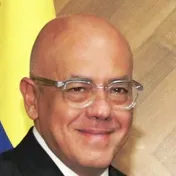
Jorge Rodríguez
President of the National Assembly · Delcy Rodríguez’s brother
Photo: duma.gov.ru, 30 Sep 2023 · CC BY 4.0, via Wikimedia Commons
Appoints / commands
- Supreme Court (TSJ): The National Assembly he presides has the power to elect the justices, and in May it expanded the court. Presiding over the Assembly is not personal hierarchical command over the court (Institutional coordination)14
Links
What the record shows
- Delcy Rodríguez’s brother; on 5 January 2026 he was reappointed president of the National Assembly (UN, para. 35).140
- The UN mission calls him a “prominent spokesperson for State repressive policies” (para. 35).1
- His Assembly passed the Hydrocarbons Law reform in January and the expansion of the Supreme Court from 20 to 32 justices in May 2026.1214
- Diosdado CabelloInterior
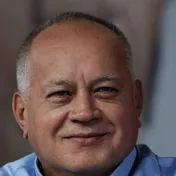
Diosdado Cabello
Minister of Interior, Justice and Peace · Sectoral Vice President for Security
Photo: VTV / Con El Mazo Dando, 28 May 2025 · public domain, via Wikimedia Commons
Appointed by / answers to
- Delcy Rodríguez: Keeps him at Interior (Legal or institutional command)10
Appoints / commands
- Douglas Rico: Reports to Interior (Legal or institutional command)10
- National Police (PNB): Reports to Interior (Legal or institutional command)10
- State police forces: Governing body of the police service (Institutional coordination)39
- Colectivos: Public backing (UN, para. 101) (De facto link documented by the UN)1
Links
- Alexis Rodríguez Cabello: Cousins10
What the record shows
- His ministry is the “governing body” of the police service nationwide; the CICPC and the National Police (PNB) report to it.3910
- Countersigned the Simón Bolívar Law and the communes reform in 2024.3435
- The UN mission notes he kept his post despite his role in past repression; in previous reports it linked him “to serious human rights violations and crimes against humanity” (para. 39). It also records his public endorsements of colectivos (para. 101).1
- His cousin, Alexis Rodríguez Cabello, was appointed head of SEBIN in October 2024; his daughter has been tourism minister since February 2026.1011
- Gustavo González LópezDefense
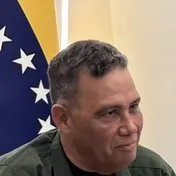
Gustavo González López
Minister of Defense since 18 Mar 2026
Photo: Michael Wimbish, U.S. Army, 26 Jun 2026 · public domain, via Wikimedia Commons
Appointed by / answers to
Appoints / commands
- Armed Forces · National Guard · Militia: Defense Ministry (Legal or institutional command)7
What the record shows
- Head of SEBIN from April 2019 to October 2024.4
- Appointed head of the DGCIM by Delcy Rodríguez on 6 January 2026 (Decree 5,203). Minister Freddy Ñáñez called it “institutional continuity.”2634
- Became defense minister on 18 March 2026, replacing Vladimir Padrino López.7
- In previous reports, the UN mission linked him “to serious human rights violations and crimes against humanity” (para. 39).1
- State governmentsEach state government runs its own police force
State governments
Each state government runs its own police force
Appoints / commands
- State police forces: Each state runs its force (Legal or institutional command)39
What the record shows
- State police forces answer to their state governments, while the Interior Ministry is the “governing body” of the whole police service (Police Service Law, art. 17). Shown generically: no specific state is singled out.39
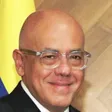
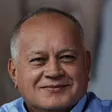
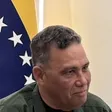
3 Security
- Alexis Rodríguez CabelloSEBIN
Alexis Rodríguez Cabello
Director of SEBIN (intelligence) since Oct 2024 · last confirmed in office in March 2026
No freely licensed photo of this person exists: the emblem of the agency they head is shown instead.
Emblem: SEBIN · public domain, via Wikimedia Commons
Appointed by / answers to
- Delcy Rodríguez: SEBIN belongs to the Vice Presidency she still holds (Legal or institutional command)2530
- Colectivos: Collaborate with State intelligence services (UN, para. 94; it does not say which) (De facto link documented by the UN)1
- VenApp: Reports (2024) (Institutional coordination)22
Appoints / commands
Links
- Diosdado Cabello: Cousins10
What the record shows
- SEBIN is “a deconcentrated body of the Vice Presidency of the Republic” (Decree 9,446, art. 3); its director is “appointed by the President” (art. 2).25
- Appointed in October 2024. When the CESPPA was abolished on 9 February 2026, SEBIN and the DGCIM remained and, according to Efecto Cocuyo (5 March), he stayed in the post. Venezuela Record could not confirm whether he still heads SEBIN.9
- Cousin of Diosdado Cabello.10
- SEBIN detained Yorman Acevedo on 13 January 2026 over a TikTok comment about Maduro’s capture; he was accused of “incitement to hatred,” according to the NGO Espacio Público.16
- Germán Gómez LárezDGCIM
Germán Gómez Lárez
Director of the DGCIM (military counterintelligence) since 18 Mar 2026
No freely licensed photo of this person exists: the emblem of the agency they head is shown instead.
Emblem: DGCIM · public domain, via Wikimedia Commons
Appointed by / answers to
What the record shows
- Delcy Rodríguez: “I have appointed Germán Gómez Lárez as the new director.” Decree 5,284 (Official Gazette No. 7,006 Extraordinary), signed by her alone.637
- The DGCIM director “is appointed by the President … and Commander in Chief” (DGCIM regulation, art. 6).27
- A retired National Guard captain and former political prisoner alleged on NTN24 that Gómez Lárez was one of his torturers while he was held. It is an allegation: it has not been independently verified and there is no conviction.8
- Douglas RicoCICPC
Douglas Rico
Director of the CICPC (criminal police) since 2016
No freely licensed photo of this person exists: the emblem of the agency they head is shown instead.
Emblem: CICPC · public domain, via Wikimedia Commons
Appointed by / answers to
- Diosdado Cabello: Reports to Interior (Legal or institutional command)10
What the record shows
- National Police (PNB)Chain: Presidency → Interior → PNB
National Police (PNB)
Chain: Presidency → Interior → PNB
Emblem: Bolivarian National Police · public domain, via Wikimedia Commons
Appointed by / answers to
- Diosdado Cabello: Reports to Interior (Legal or institutional command)10
- Colectivos: Act with police (UN, paras. 89, 96) (De facto link documented by the UN)1
Appoints / commands
- Those who dissent: Detained Javier Oropeza, per El Pitazo and the opposition (Sep 2026; other outlets say SEBIN) (Documented action)184419
What the record shows
- State police forcesRun by state governments · Interior is the governing body
State police forces
Run by state governments · Interior is the governing body
Appointed by / answers to
- Diosdado Cabello: Governing body of the police service (Institutional coordination)39
- State governments: Each state runs its force (Legal or institutional command)39
What the record shows
- Each state police force depends on its state government; the Interior Ministry is the “governing body” of the police service nationwide (art. 17).39
- Armed Forces · National Guard · MilitiaUnder the Defense Ministry; commander in chief: the president
Armed Forces · National Guard · Militia
Under the Defense Ministry; commander in chief: the president
Emblem: Bolivarian National Armed Forces · public domain, via Wikimedia Commons
Appointed by / answers to
- Gustavo González López: Defense Ministry (Legal or institutional command)7
Appoints / commands
What the record shows
- The UN notes that the National Guard has not been reformed and keeps the same units and detention centers (para. 46).1







4 Territory
- VenAppGovernment reporting app
VenApp
Government reporting app
Appoints / commands
- Alexis Rodríguez Cabello: Reports (2024) (Institutional coordination)22
What the record shows
- After the 2024 election the government added anonymous reports against opponents; Amnesty International warned of arbitrary detentions.22
- In June 2026 the government activated it to report missing people and damaged homes after the double earthquake. There is no public confirmation that its political-reporting functions are still active.4748
- ColectivosArmed pro-government groups outside the formal law
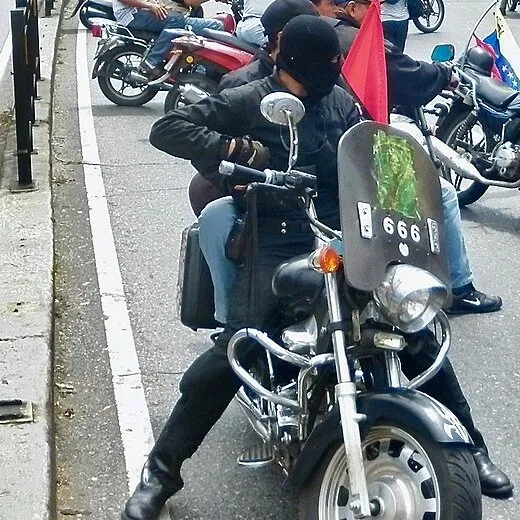
Colectivos
Armed pro-government groups outside the formal law
Photo: Oscar (derivative work: ZiaLater), Caracas, 19 Apr 2017 · CC BY-SA 4.0, via Wikimedia Commons
Appointed by / answers to
- Diosdado Cabello: Public backing (UN, para. 101) (De facto link documented by the UN)1
Appoints / commands
- Communal councils and communes: Participate in or control councils (UN, para. 93) (De facto link documented by the UN)1
- National Police (PNB): Act with police (UN, paras. 89, 96) (De facto link documented by the UN)1
- Alexis Rodríguez Cabello: Collaborate with State intelligence services (UN, para. 94; it does not say which) (De facto link documented by the UN)1
- Those who dissent: Act alongside security forces in times of unrest (UN, para. 96) (Documented action)1
What the record shows
- No law integrates them into the armed forces or the police.
- The UN finds “substantial evidence of long-standing relationships between colectivos and State institutions” (para. 88): operational orders and direct dealings with ministers, legislators, governors, police directors, judges and prosecutors (para. 89), places on public payrolls (para. 90) and firearms and ammunition supplied by the Government (para. 92).1
- According to the UN they “participate in or control” community councils and social programs (para. 93), run neighborhood informant networks in “collaboration with State intelligence services” (para. 94) and “frequently acted alongside police, military and intelligence personnel” (para. 96).1
- Communal councils and communesNeighborhood bodies with a legal security role
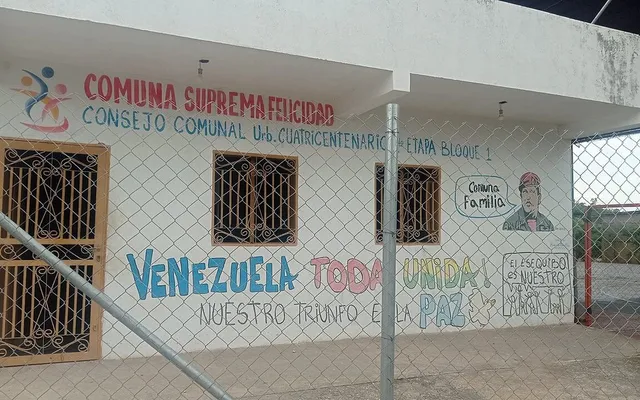
Communal councils and communes
Neighborhood bodies with a legal security role
Photo: Zerojosefer, Maracaibo, 2025 · CC0, via Wikimedia Commons
Appointed by / answers to
- Armed Forces · National Guard · Militia: Security commissions + Militia (Institutional coordination)3235
- Colectivos: Participate in or control councils (UN, para. 93) (De facto link documented by the UN)1
What the record shows
- The 2023 reform orders them to “promote, participate and contribute, jointly with the Bolivarian Militia, to the security and integral defense of the Nation” (art. 24.8) and lists a “security and integral defense committee” (art. 26.5).32
- The 2024 communes reform adds a Security and Peace Commission with the same formula (art. 43.2), communal justices of the peace and communal charters to help guarantee “public order.”35
- Courts and Public Prosecutor’s OfficeApply the anti-hate and Simón Bolívar laws
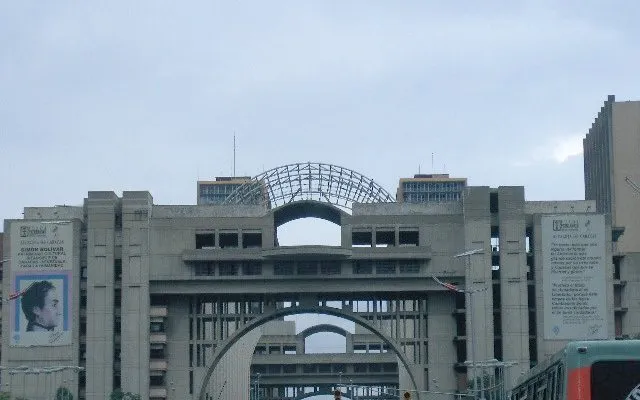
Courts and Public Prosecutor’s Office
Apply the anti-hate and Simón Bolívar laws
Photo: Jesús Rincón · CC BY-SA 4.0, via Wikimedia Commons
Appointed by / answers to
- Supreme Court (TSJ): Top of the judiciary (Legal or institutional command)1
Appoints / commands
- Those who dissent: Apply the anti-hate law (UN, para. 41) (Documented action)1
What the record shows


5 Result
- Those who dissentOpponents, journalists and ordinary citizens
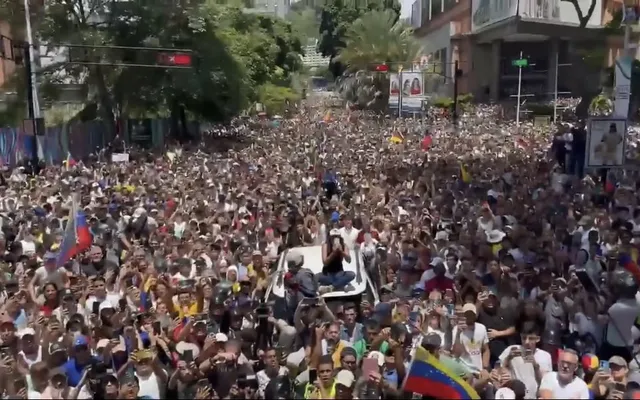
Those who dissent
Opponents, journalists and ordinary citizens
Photo: Confidencial, 3 Aug 2024 · CC BY 3.0, via Wikimedia Commons
Appointed by / answers to
- Alexis Rodríguez Cabello: Detained Yorman Acevedo (Jan 2026; released 26 Sep) (Documented action)1642
- National Police (PNB): Detained Javier Oropeza, per El Pitazo and the opposition (Sep 2026; other outlets say SEBIN) (Documented action)184419
- Courts and Public Prosecutor’s Office: Apply the anti-hate law (UN, para. 41) (Documented action)1
- Colectivos: Act alongside security forces in times of unrest (UN, para. 96) (Documented action)1
What the record shows
- Yorman Acevedo: detained by SEBIN in January 2026 over a TikTok comment.16
- Javier Oropeza: detained in September 2026 (by the PNB according to El Pitazo; by SEBIN according to Infobae) and released hours later.1819
- Foro Penal counted 344 political prisoners on 14 September 2026: 200 civilians and 144 military.17
2026 in two lanes
Two transformations, one continuity to examine
The economic opening and the reorganization of the security agencies moved forward in 2026. This timeline sets official decisions, changes of authorities and documented actions side by side to identify what was transformed and which institutional capacities remained.
Every point is a dated, sourced fact. Filter by lane, then tap a point to read it.
Maduro captured; the Supreme Court names an acting president
The U.S. captures Nicolás Maduro. The Supreme Court names Vice President Delcy Rodríguez acting president; she is sworn in on 5 January (UN, para. 17).128
Decree 5,203: a former SEBIN chief takes over the DGCIM
Delcy Rodríguez appoints Gustavo González López, head of SEBIN from 2019 to 2024, as director of the DGCIM. A minister calls it “institutional continuity.”2634
Detained for a TikTok comment
SEBIN detains Yorman Acevedo over a TikTok comment about Maduro’s capture; he is accused of “incitement to hatred.”16
The oil sector opens to private companies
The National Assembly, led by Jorge Rodríguez, passes the Hydrocarbons Law reform that opens oil to private companies. Jorge Rodríguez announces a sale of crude to the U.S. government.12
CESPPA abolished; SEBIN and DGCIM remain
Decree 5,248 abolishes the CESPPA. SEBIN keeps the director appointed in 2024, Alexis Rodríguez Cabello.9
Padrino López out; a new DGCIM chief
González López moves to Defense. Decree 5,284, signed by Delcy Rodríguez alone, names Germán Gómez Lárez head of the DGCIM.7376
The IMF and the World Bank return
Both institutions resume dealings with Venezuela, suspended since 2019. The UN links it to the partial lifting of U.S. sanctions that revived the oil sector (para. 22).361
End of the Amnesty Law
Delcy Rodríguez ends the amnesty law and moves ahead with a judicial reform.15
The Supreme Court grows from 20 to 32
In April eight justices are made to retire; in May the Assembly expands the court. The UN warns of an increased “risk of political influence” (para. 47).141
Oil agreement with the U.S.
17 fields, some 65 billion barrels of potential according to the government, 25 years according to Delcy Rodríguez: “We want to be an energy power.”13
344 political prisoners
Foro Penal counts 344 political prisoners: 200 civilians and 144 military.17
UN: the repressive apparatus remains intact
The UN Fact-Finding Mission presents its report: limited political changes, the repressive apparatus intact.21
Javier Oropeza detained
The Voluntad Popular leader is detained in Barquisimeto, 48 hours after returning from exile and one day after obtaining the dismissal of his case under the Amnesty Law; he is released some six hours later, with precautionary measures according to the opposition. El Pitazo and the opposition said the arrest was made by the National Police (PNB); Infobae and NTN24 attributed it to SEBIN.1819444546
Yorman Acevedo released
After eight months in detention over a TikTok comment, he is released in Maracay. Espacio Público reported the release; the conditions were not disclosed.4243
Anti-hate law: reform requested, still in force
Delcy Rodríguez says there was “abusive use” of the law and asks to reform it; on 13 October the Assembly sends the bill to the Supreme Court, whose Constitutional Chamber declares it constitutional on 15 October (ruling No. 1034); the debate returns to the Assembly. Until a reform is passed, the 2017 law remains in force.202141
January
Turning point 3 Jan
Maduro captured; the Supreme Court names an acting president
The U.S. captures Nicolás Maduro. The Supreme Court names Vice President Delcy Rodríguez acting president; she is sworn in on 5 January (UN, para. 17).128
Security apparatus 6 Jan
Decree 5,203: a former SEBIN chief takes over the DGCIM
Delcy Rodríguez appoints Gustavo González López, head of SEBIN from 2019 to 2024, as director of the DGCIM. A minister calls it “institutional continuity.”2634
Security apparatus 13 Jan
Detained for a TikTok comment
SEBIN detains Yorman Acevedo over a TikTok comment about Maduro’s capture; he is accused of “incitement to hatred.”16
Economy 22–23 Jan
The oil sector opens to private companies
The National Assembly, led by Jorge Rodríguez, passes the Hydrocarbons Law reform that opens oil to private companies. Jorge Rodríguez announces a sale of crude to the U.S. government.12
February
Security apparatus 9 Feb
CESPPA abolished; SEBIN and DGCIM remain
Decree 5,248 abolishes the CESPPA. SEBIN keeps the director appointed in 2024, Alexis Rodríguez Cabello.9
March
April
Economy 16 Apr
The IMF and the World Bank return
Both institutions resume dealings with Venezuela, suspended since 2019. The UN links it to the partial lifting of U.S. sanctions that revived the oil sector (para. 22).361
Security apparatus 23 Apr
End of the Amnesty Law
Delcy Rodríguez ends the amnesty law and moves ahead with a judicial reform.15
May
August
Economy 28 Aug
Oil agreement with the U.S.
17 fields, some 65 billion barrels of potential according to the government, 25 years according to Delcy Rodríguez: “We want to be an energy power.”13
September
Security apparatus 14 Sep
344 political prisoners
Foro Penal counts 344 political prisoners: 200 civilians and 144 military.17
Security apparatus 16 Sep
UN: the repressive apparatus remains intact
The UN Fact-Finding Mission presents its report: limited political changes, the repressive apparatus intact.21
Security apparatus 17 Sep
Javier Oropeza detained
The Voluntad Popular leader is detained in Barquisimeto, 48 hours after returning from exile and one day after obtaining the dismissal of his case under the Amnesty Law; he is released some six hours later, with precautionary measures according to the opposition. El Pitazo and the opposition said the arrest was made by the National Police (PNB); Infobae and NTN24 attributed it to SEBIN.1819444546
Security apparatus 26 Sep
Yorman Acevedo released
After eight months in detention over a TikTok comment, he is released in Maracay. Espacio Público reported the release; the conditions were not disclosed.4243
Security apparatus 29 Sep–15 Oct
Anti-hate law: reform requested, still in force
Delcy Rodríguez says there was “abusive use” of the law and asks to reform it; on 13 October the Assembly sends the bill to the Supreme Court, whose Constitutional Chamber declares it constitutional on 15 October (ruling No. 1034); the debate returns to the Assembly. Until a reform is passed, the 2017 law remains in force.202141
Key ideaThe economic changes have identifiable dates, agreements and reforms. The transformation of the security structures also calls for examining the powers they keep, the decisions they take and how they act toward those who express political opposition.
The documentary evidence
The rules that organize power and the decrees that exercise it
Official documents show how authority over Venezuela’s intelligence and counterintelligence agencies is organized. In 2013 the Organic Regulation of SEBIN placed it under the Vice Presidency of the Republic. In 2015 the Organic Regulation of the DGCIM gave the Presidency the power to appoint its director. In January and March 2026 Delcy Rodríguez exercised that presidential power with new appointments.
These instruments make it possible to distinguish which powers were set out in law, which authorities exercised them and what institutional continuity can be documented after Maduro’s departure. Each card shows the relevant legal text, its source and what it proves.
Civilian intelligence under the Vice Presidency
Decree 9,446 · Organic Regulation of SEBIN
El Servicio Bolivariano de Inteligencia Nacional es un órgano desconcentrado de la Vicepresidencia de la República … La máxima autoridad … corresponde al Director o Directora General, que será nombrado por el Presidente de la República.
The Bolivarian National Intelligence Service is a deconcentrated body of the Vice Presidency of the Republic … Its highest authority is the Director General, who shall be appointed by the President.
Arts. 3 and 2 · p. 400,953
What it proves
SEBIN depends on the Vice Presidency — the post Delcy Rodríguez still holds.
The presidential power to appoint the director
Decree 1,605 · Organic Regulation of the DGCIM
La Dirección General de Contrainteligencia Militar está dirigida y administrada por un Director o Directora General, quien es designado por el Presidente o Presidenta de la República Bolivariana de Venezuela y Comandante en Jefe de la Fuerza Armada Nacional Bolivariana.
The Directorate General of Military Counterintelligence is led by a Director General, who is appointed by the President of the Bolivarian Republic of Venezuela and Commander in Chief of the Bolivarian National Armed Forces.
Art. 6 · p. 418,693 · countersigned by the Foreign Minister, Delcy Rodríguez (p. 418,695)
What it proves
She countersigned the rule that today gives her the power to appoint the head of the DGCIM.
Sources: 27
The presidential power, exercised
Decree 5,203 · Appointment of the DGCIM director
Nombro al ciudadano General en Jefe GUSTAVO ENRIQUE GONZÁLEZ LÓPEZ … como DIRECTOR GENERAL DE LA DIRECCIÓN GENERAL DE CONTRAINTELIGENCIA MILITAR (DGCIM). “Ejecútese”: Delcy Eloína Rodríguez Gómez, Presidenta (E), sin refrendos.
I appoint General-in-Chief GUSTAVO ENRIQUE GONZÁLEZ LÓPEZ … as DIRECTOR GENERAL OF THE DIRECTORATE GENERAL OF MILITARY COUNTERINTELLIGENCE (DGCIM). “Let it be executed”: Delcy Eloína Rodríguez Gómez, Acting President — no countersignatures.
Art. 1 · based on arts. 226 and 236 (2, 5, 6) of the Constitution and art. 46 of the Public Administration Law. It does not cite the DGCIM regulation, whose art. 6 sets out the same power
What it proves
An appointed authority that appoints: she names him alone, one day after taking the oath.
The directors change; the power remains
Decree 5,284 · Appointment of the DGCIM director
Nombro al ciudadano GERMÁN EDOARDO GÓMEZ LÁREZ … como DIRECTOR GENERAL DE LA DIRECCIÓN GENERAL DE CONTRAINTELIGENCIA MILITAR (DGCIM). Firma: Delcy Eloína Rodríguez Gómez, Presidenta (E).
I appoint GERMÁN EDOARDO GÓMEZ LÁREZ … as DIRECTOR GENERAL OF THE DIRECTORATE GENERAL OF MILITARY COUNTERINTELLIGENCE (DGCIM). Signed: Delcy Eloína Rodríguez Gómez, Acting President.
Art. 1 · same legal basis as Decree 5,203 · no countersignatures
What it proves
The power to appoint the DGCIM chief was used twice in ten weeks, by her alone.
Sources: 37
Prison, disqualification and a national registry
Liberator Simón Bolívar Organic Law
Toda persona que “promueva, instigue, solicite, invoque, favorezca, facilite, respalde o participe” en la adopción de medidas coercitivas unilaterales … será sancionada con prisión de veinticinco (25) a treinta (30) años (art. 11). El juez impondrá inhabilitación política hasta por sesenta (60) años (art. 13). Un Registro nacional de personas que “colidan con esta Ley” (art. 23).
Anyone who “promotes, instigates, requests, invokes, favors, facilitates, supports or participates” in the adoption of unilateral coercive measures … shall be punished with 25 to 30 years in prison (art. 11). The judge shall impose political disqualification for up to 60 years (art. 13). A national registry of people “who conflict with this Law” (art. 23).
Arts. 11–13 and 23 · countersigned by Delcy Rodríguez (two posts) and Diosdado Cabello
What it proves
A sanctioning regime with 25 to 30 years in prison for the conduct defined in article 11 and accessory political disqualification of up to 60 years under article 13. It also creates a national registry and restrictive administrative measures (art. 23): a State capacity to identify and restrict people.
State security is linked to communal power
Reform of the Organic Law of Communes
La Comisión de Seguridad y Paz de la Comuna debe “Promover, participar y contribuir, conjuntamente con la Milicia Bolivariana, en la seguridad y defensa integral de la Nación”. La reforma crea además jueces de paz comunal.
The Security and Peace Commission of the Commune shall “promote, participate and contribute, jointly with the Bolivarian Militia, to the security and integral defense of the Nation.” The reform also creates communal justices of the peace.
Art. 43.2 (reformed text) · countersigned by Delcy Rodríguez (two posts), Cabello and Padrino López
What it proves
The legal creation of the Commune’s Security and Peace Commission and its role in security and integral defense jointly with the Bolivarian Militia (arts. 42 and 43.2).
Sources: 35
The court ruling that opened the acting presidency
File 2026-00001 · joint opinion, no dissent
Ante la “ausencia forzosa” de Nicolás Maduro, la Sala Constitucional interpretó “de oficio” los arts. 234 y 239 de la Constitución y ordenó que la Vicepresidenta Ejecutiva “ASUMA Y EJERZA en condición de ENCARGADA” la Presidencia, con todas las atribuciones inherentes al cargo. Ponencia conjunta, sin voto salvado y sin plazo expreso.
Faced with Nicolás Maduro’s “forced absence”, the Constitutional Chamber interpreted articles 234 and 239 of the Constitution “ex officio” and ordered the Executive Vice President to “ASSUME AND EXERCISE” the Presidency “as ACTING PRESIDENT”, with all the powers of the office. Joint opinion, no dissent, no time limit set.
Not a gazette: TSJ record and Acceso a la Justicia
What it proves
The Supreme Court intervened directly with a ruling that ordered Delcy Rodríguez to take on and exercise the presidential powers. Acceso a la Justicia argues that the Constitution gives the court no power to order it.
The laws
The laws that punish opinion
Maximum prison sentence, on a 0–30-year scale, and status as of 22 October 2026.
| Law | Maximum prison | Status |
|---|---|---|
| Simón Bolívar LawG.O. 6,859 Ext., Nov 2024 | 25–30 years | In force, unchanged34 |
| Anti-hate lawConstituent Assembly, Nov 2017 | up to 20 years | In force; the Supreme Court cleared a reform bill on 15 Oct 2026 and the Assembly is debating it. UN: used “systematically” against criticism (para. 41)2021411 |
| NGO lawAug 2024 | no prison (administrative penalties) | In force; the UN mission has warned it is “a mechanism of political control” (para. 42)1 |
| Communes reformG.O. 6,872 Ext., Dec 2024 | creates no crimes | In force35 |
VenApp
From citizen reports to political surveillance
VenApp was presented in 2022 as a tool to report problems with public services. During the 2024 post-election crisis, Amnesty International denounced its use to point out people identified with the opposition. In October 2025, Nicolás Maduro asked people to use it to report everything they see and hear.\n\nThe relevance of this change does not lie only in the technology. A platform that records information about third parties can become a tool of political control when the reports are used to identify, intimidate or persecute people for their real or attributed opinions.\n\nIn June 2026, under Delcy Rodríguez’s acting presidency, VenApp was officially activated again as an emergency channel. This documents the continuity of its institutional use after Maduro, although it does not establish that the political-reporting functions remained active.
Dec 2022
Announced by the government as an app to report failures in public services.38
Jul–Aug 2024
After the election, the government adds a channel for anonymous reports against opponents. Amnesty International warns of illegitimate detention; the IACHR says the app “has been reconfigured”.382249
Aug 2024
Apple and Google remove it from their stores. That is not the end of the service: it keeps working for those who had it and on the web.2223
Oct 2025
Maduro urges people to use it to “report everything they hear, everything they read” (CNN).23
Jun 2026Documented official use
After the double earthquake of 24 June, Delcy Rodríguez’s government activates it to report missing people and damaged homes. There is no public confirmation that its political-reporting functions are still active, nor of who can access the data.4748
In its 2025 annual report, the IACHR warned that citizens are forced to hand over sensitive information through platforms such as VenApp and criticized official campaigns that urged people to report their neighbors (paras. 127–128).50
Editorial highlight
A platform can keep its public function and, at the same time, raise questions about the political uses of the information it receives. Technological continuity calls for examining who manages the data, who can use it and what controls protect people identified by their political opinions.
Crystal Vault
When citizens’ identity becomes control information
Political surveillance can reach beyond cameras, citizen reports and the monitoring of communications. It can also work through the integration of the administrative records that allow the State to identify people, know their movements and manage their access to services.
- SAIMEIdentity and migration records
- Patria systemPersonal and family data, social benefits
- Public banksFinancial operations and information
“A single centralized node”, according to La Gran Aldea
Cross-referencing and identification: the described possibility of relating identity, movements and financial operations, and of restricting services
On 26 December 2025, journalist Milagros Socorro published in La Gran Aldea “A crystal vault”, a column based on anonymous technical sources about an alleged technological architecture that would interconnect the data of SAIME (identity and migration), the public banks and the Patria system. According to the text, those databases were merged “into a single centralized node”, which would make it possible to relate identity, movement and financial information and to restrict certain services automatically. El Tiempo picked up the story on 31 December.\n\nIn July 2026 the European Union Agency for Asylum (EUAA) cited that text in its report Venezuela: Country Focus, in the section on monitoring mechanisms. In March 2026, DFRLab and Conexión Segura y Libre published Watch the Watchers, a report on surveillance technologies for political control which says that infrastructure remains fully operational under Delcy Rodríguez’s acting presidency.\n\nSystems that collect and cross-reference data raise a specific dimension of political control: the possibility of identifying people and relating their activities without constant physical surveillance. However, the full deployment and actual functioning of the capabilities attributed to the “Crystal Vault” require further technical verification.\n\nThe question this background adds to our investigation is the continuity of the State’s digital infrastructure after January 2026, its capacity to relate citizens’ information and the guarantees available against possible discriminatory or persecutory uses against people for their real or attributed political opinion.5152
Concept“Data interoperability with coercive potential”: the possibility that information collected for administrative purposes is integrated and used to identify, classify or restrict people.
The balance
What was transformed and what remains
Prison releases, announced reforms and institutional changes point to a new political stage. International reports make it possible to set those events against the continuity of the security agencies, the restrictions on rights and the actions against people identified by their political opinion.
Drag the slider to compare. Both columns are sourced.
Documented changes
What was transformed
- Carried outPrison releases and an amnesty — short-lived and conditional.115
- DocumentedDialogue with the opposition and an agreement to renew the Supreme Court.1
- In progress, not in forceA bill to reform the anti-hate law: the Supreme Court cleared it on 15 October and the Assembly is debating it. It is an initiative in progress; the 2017 law remains in force.202141
- DocumentedThe harshest repression eased: of 214 political detentions between September 2025 and July 2026, 207 happened before the end of January (UN, para. 57).1
Changes must be told apart by whether they were carried out, announced or are still pending.
Documented continuities
What remains
- SEBIN and the DGCIM keep “the same structures” and “the same rules” (UN, para. 46).1
- The National Guard has not been reformed (UN, para. 46).1
- Diosdado Cabello is still at Interior.10
- The Simón Bolívar Law is intact.34
- Colectivos have not been disarmed.1
- The UN says the political openings “remain partial, conditional and reversible at best” (para. 106).1
The continuity of a power does not automatically mean it is being used to persecute.
Political change versus the continuity of the capacity to persecute
The changes recorded in 2026 show a shift in Venezuela’s landscape: prison releases, a reorganization of authorities, reform initiatives and new economic relations. Yet the evolution of political conditions also calls for examining which institutions keep their powers, which control mechanisms remain available and how the authorities act toward those who voice opinions contrary to those in power.
The decline of certain repressive practices is a documentable change. Their persistence in other forms, especially when it affects people identified by their real or attributed political opinion, poses a different problem: the continuity of the institutional conditions that make it possible to restrict rights and to persecute.
The reach of Venezuela’s transformation cannot be established only by the number of people released or the reforms announced. It must also be examined through the guarantees that exist to prevent new arbitrary detentions, acts of intimidation and restrictions linked to political expression or participation.
Key ideaThe persistence of the capacity to persecute is a different object of investigation from how often that capacity is used.
Method
How we did it
Methodological design of the investigation
This investigation was built on a methodological design for the documentary reconstruction of power and its operational persistence, conceived to examine the institutional transformations of the Venezuelan State during 2026 and to establish which relationships of authority, powers and capacities to act remain after Nicolás Maduro’s departure.
Read the full method
Our approach is qualitative, documentary, historical-institutional and comparative. We combine legal analysis, the chronological reconstruction of official decisions and the comparison of documented events in order to explain how State power is configured, transmitted and exercised. This makes it possible to go beyond a reading centered only on who holds each post and to study the institutional relationships that survive when their occupants change.
Three levels of analysis
We organized the investigation in three related levels.
The first is the legal configuration of power. We examine official gazettes, laws, regulations and court rulings to identify the creation of agencies, their powers, the powers of appointment and the legal mechanisms that govern the exercise of authority. Each document is read according to its nature and scope, distinguishing the powers provided by law from their actual use.
The second addresses institutional continuity and the changes in positions of command. We reconstruct the documentary trajectories of certain officials and compare the rules in force before January 2026 with later decisions. This shows the permanence of powers, the reshuffling of officials and the relationships between the security, intelligence, defense and territorial administration agencies. The org chart represents these relationships with distinct categories of appointment, legal command, coordination and de facto links, each attributed to an identifiable source.
The third examines State actions and their consequences for people. We compare the institutional background with the events documented during 2026, paying particular attention to detentions, intimidation and restrictions related to the expression of real or attributed political opinions. We analyze separately the action, the agency named, the person affected, the documented circumstances and the available evidence about a possible political motivation.
Operational persistence of coercive power
As an analytical category for this investigation, we propose the “operational persistence of coercive power” to examine one specific dimension of State continuity: the preservation and possible use of institutional capacities of control, surveillance, coercion and sanction after a change in political leadership.
This category distinguishes the existence of a structure, the availability of its powers and the documented use of its mechanisms. The permanence of an agency does not automatically prove political persecution; nor does a decline in certain actions prove that the capacities that could allow their repetition have disappeared.
That is why we study the relationship between legal continuity, the exercise of powers, verifiable actions and the institutional guarantees meant to prevent abuse. The category works as an interpretive tool to recognize both effective transformations and continuities that require further examination.
Sources, comparison and documentary traceability
Our corpus includes official gazettes of the Bolivarian Republic of Venezuela, legislative instruments, Supreme Court rulings, reports of the Independent International Fact-Finding Mission on Venezuela, documentation by human rights organizations and identifiable press reports.
We distinguish legal, judicial, institutional, international and press sources by their capacity to prove specific facts. Official documents establish formal decisions and powers; international reports provide findings and allegations that must be read within their scope; press reports help reconstruct events and compare versions.
Every link in the org chart and every event in the timeline points to an identified source. We distinguish established facts, statements attributed to third parties and inferences drawn from the documents as a whole. The signature crops come from the gazettes themselves; the yellow highlighting is ours and ID numbers were covered. Portraits are only used when they carry a free license; when none exists, we show the public-domain emblem of the agency the person heads.
Scope and limits of the investigation
Reconstructing an institutional chain of command is not, by itself, proof of individual responsibility for human rights violations. Likewise, signing a rule proves formal participation in that instrument, but does not automatically show the signer’s involvement in later actions.
Relationships without sufficient public confirmation are flagged as such. When versions contradict each other, we keep their attribution and avoid presenting as proven what remains to be verified. Allegations against specific people are cited as what they are: allegations attributed to whoever makes them.
This methodological design examines the transformation of Venezuelan power through a question of institutional scope: what changed in the leadership of the State, which powers and capacities remained, and which later actions help explain the consequences of that continuity for the exercise of political rights. The investigation thus leaves open a line of analysis on the relationship between the formal transformations of power, the persistence of its coercive capacities and the guarantees needed to prevent their use against people for their real or attributed political opinion.
Original idea and methodological design: Minerva Mendoza Paipa. Research and editing: Venezuela Record.
Sources and posts last checked on 22 October 2026.
Found an error? Write to us through our corrections page. We reply within 7 days.
Sources (56)
- UN Human Rights Council Independent International Fact-Finding Mission on Venezuela, report A/HRC/63/57 (advance edited version) · 17 Aug 2026
- OHCHR Venezuela: Amidst limited political changes, country’s repressive apparatus remains intact, UN Fact-Finding Mission says · 16 Sep 2026
- IUSDATA Summary of Official Gazette No. 6,957 Extraordinary (6 Jan 2026) · 6 Jan 2026
- Swissinfo / EFE Delcy Rodríguez appoints new heads of the Honor Guard and military counterintelligence · 7 Jan 2026
- MIPPCI Acting President makes new appointments in the Honor Guard and DGCIM · Jan 2026
- X · @delcyrodriguezv Post by Delcy Rodríguez announcing the new DGCIM director · 18 Mar 2026
- El Imparcial Delcy Rodríguez removed Vladimir Padrino López after 12 years and appointed Gustavo González López · 19 Mar 2026
- NTN24 Former political prisoner says Germán Gómez Lárez, the new DGCIM director, was one of his torturers · 19 Mar 2026
- Efecto Cocuyo SEBIN, DGCIM and CESPPA under Delcy Rodríguez (fact check) · 5 Mar 2026
- InSight Crime Profile: Diosdado Cabello
- La Nación (Paraguay) Venezuela’s acting president adds the daughter of the powerful interior minister to her cabinet · 2 Feb 2026
- Energías Renovables Venezuela opens oil production to private companies (Hydrocarbons Law) · 23 Jan 2026
- Forbes Colombia Venezuela projects more than US$200 billion in revenue after the oil agreement with the U.S. · 31 Aug 2026
- Infobae Parliament approves increasing the number of Supreme Court justices · 5 May 2026
- El Nacional Delcy Rodríguez ends the Amnesty Law and moves ahead with a judicial reform · 23 Apr 2026
- El Tiempo A Venezuelan remains detained for a TikTok comment on Maduro’s capture, NGO says · 8 Apr 2026
- Efecto Cocuyo Foro Penal reports 344 political prisoners still held in Venezuela · 18 Sep 2026
- El Pitazo PNB detains former mayor Javier Oropeza 48 hours after his return to the country · 17 Sep 2026
- Infobae Opposition leader Javier Oropeza released after arbitrary detention · 18 Sep 2026
- Telemundo 51 “There was abusive use”: Delcy Rodríguez asks to reform the anti-hate law · 30 Sep 2026
- Prensa Latina Anti-hate law reform bill sent to the Supreme Court · 13 Oct 2026
- La Tercera VenApp: Amnesty questions the app Maduro uses to receive reports against opponents · 7 Aug 2024
- CNN via KEYT Fearing US effort to remove him, Maduro urges Venezuelans to snitch via app · 4 Nov 2025
- Human Rights Watch World Report 2026: Venezuela
- Gaceta Oficial Official Gazette No. 40,153 (24 Apr 2013): Decree 9,446, Organic Regulation of SEBIN · 24 Apr 2013
- Wikimedia Commons Official Gazette No. 6,957 Extraordinary (6 Jan 2026): Decree 5,203 · 6 Jan 2026
- Wikimedia Commons Official Gazette No. 40,599 (10 Feb 2015): Decree 1,605, Organic Regulation of the DGCIM · 10 Feb 2015
- Acceso a la Justicia The Constitutional Chamber orders Delcy Rodríguez to take over the presidency (ruling No. 1) · 3 Jan 2026
- TSJ Record of the Constitutional Chamber, 3 Jan 2026 · 3 Jan 2026
- Efecto Cocuyo Why hasn’t Delcy Rodríguez appointed an executive vice president? · 19 Apr 2026
- RNV CICPC director Douglas Rico reviews operational progress · 26 Aug 2026
- Gaceta Oficial Official Gazette No. 6,759 Extraordinary (25 Aug 2023): reform of the Communal Councils Law (reprinted “due to material error”; first published in No. 6,749 Extraordinary, 26 Jun 2023) · 25 Aug 2023
- Gaceta Oficial Official Gazette No. 6,749 Extraordinary (26 Jun 2023): first publication of the Communal Councils Law reform · 26 Jun 2023
- Gaceta Oficial Official Gazette No. 6,859 Extraordinary (29 Nov 2024): Liberator Simón Bolívar Organic Law · 29 Nov 2024
- Gaceta Oficial Official Gazette No. 6,872 Extraordinary (30 Dec 2024): reform of the Organic Law of Communes · 30 Dec 2024
- World Bank World Bank Group announces resumption of dealings with Venezuela (statement) · 16 Apr 2026
- Wikimedia Commons Official Gazette No. 7,006 Extraordinary (18 Mar 2026): Decree 5,284, appointment of the DGCIM director · 18 Mar 2026
- Maldita.es VenApp, the app the Venezuelan government uses to report citizens · 31 Jul 2024
- vLex Venezuela Organic Law of the Police Service and the Bolivarian National Police Corps (art. 17: the ministry is the “governing body” of the police service)
- Chequeado / Factchequeado Who is Delcy Rodríguez, Venezuela’s interim president after Nicolás Maduro’s capture · 5 Jan 2026
- El Nacional The Supreme Court endorses the reform of the anti-hate law and lets the National Assembly continue the debate (ruling No. 1034) · 15 Oct 2026
- Noticiero Digital Yorman Acevedo, detained over a comment on Maduro’s capture, is released · 26 Sep 2026
- El Diario Who are the political prisoners released (Espacio Público reported the release; the conditions were not disclosed) · 26 Sep 2026
- Infobae / EFE Former mayor Oropeza released after strong pressure from Venezuelans, the opposition says · 18 Sep 2026
- NTN24 Former mayor Javier Oropeza released · 17 Sep 2026
- La Prensa de Lara Oropeza released under precautionary measures · 18 Sep 2026
- El Nacional VenApp and a phone line activated to report missing people after the double earthquake · 27 Jun 2026
- teleSUR VenApp available to Venezuelans after the earthquakes · 25 Jun 2026
- IACHR / RELE Press release 184/24 on post-electoral repression in Venezuela (VenApp “has been reconfigured”) · 15 Aug 2024
- IACHR Annual Report 2025, chapter IV.B Venezuela, paras. 127–128 (sensitive information via VenApp; campaigns urging people to report neighbors) · 2026
- La Gran Aldea Milagros Socorro, “A crystal vault: the re-engineering of civil control in Venezuela” (column based on anonymous technical sources) · 26 Dec 2025
- El Tiempo Investigation reveals a new surveillance system that would let chavismo block citizens with a click · 31 Dec 2025
- EUAA Venezuela: Country Focus, section 1.7 “Monitoring mechanisms” · Jul 2026
- DFRLab / Conexión Segura y Libre Watch the Watchers: surveillance technologies for political control in Venezuela · 26 Mar 2026
- Acceso a la Justicia Analysis of the Liberator Simón Bolívar Organic Law (executive summary, PDF) · 27 Dec 2024
- Gaceta Oficial Official Gazette No. 6,999 Extraordinary (18 Mar 2026): Decree 5,277, appointment of the Minister of Defense · 18 Mar 2026
Source 1 · UN Human Rights Council · 17 Aug 2026
Independent International Fact-Finding Mission on Venezuela, report A/HRC/63/57 (advance edited version)
Source 2 · OHCHR · 16 Sep 2026
Venezuela: Amidst limited political changes, country’s repressive apparatus remains intact, UN Fact-Finding Mission says
Source 3 · IUSDATA · 6 Jan 2026
Summary of Official Gazette No. 6,957 Extraordinary (6 Jan 2026)
Source 4 · Swissinfo / EFE · 7 Jan 2026
Delcy Rodríguez appoints new heads of the Honor Guard and military counterintelligence
Source 5 · MIPPCI · Jan 2026
Acting President makes new appointments in the Honor Guard and DGCIM
Source 6 · X · @delcyrodriguezv · 18 Mar 2026
Post by Delcy Rodríguez announcing the new DGCIM director
Source 7 · El Imparcial · 19 Mar 2026
Delcy Rodríguez removed Vladimir Padrino López after 12 years and appointed Gustavo González López
Source 8 · NTN24 · 19 Mar 2026
Former political prisoner says Germán Gómez Lárez, the new DGCIM director, was one of his torturers
Source 9 · Efecto Cocuyo · 5 Mar 2026
SEBIN, DGCIM and CESPPA under Delcy Rodríguez (fact check)
Source 11 · La Nación (Paraguay) · 2 Feb 2026
Venezuela’s acting president adds the daughter of the powerful interior minister to her cabinet
Source 12 · Energías Renovables · 23 Jan 2026
Venezuela opens oil production to private companies (Hydrocarbons Law)
Source 13 · Forbes Colombia · 31 Aug 2026
Venezuela projects more than US$200 billion in revenue after the oil agreement with the U.S.
Source 14 · Infobae · 5 May 2026
Parliament approves increasing the number of Supreme Court justices
Source 15 · El Nacional · 23 Apr 2026
Delcy Rodríguez ends the Amnesty Law and moves ahead with a judicial reform
Source 16 · El Tiempo · 8 Apr 2026
A Venezuelan remains detained for a TikTok comment on Maduro’s capture, NGO says
Source 17 · Efecto Cocuyo · 18 Sep 2026
Foro Penal reports 344 political prisoners still held in Venezuela
Source 18 · El Pitazo · 17 Sep 2026
PNB detains former mayor Javier Oropeza 48 hours after his return to the country
Source 19 · Infobae · 18 Sep 2026
Opposition leader Javier Oropeza released after arbitrary detention
Source 20 · Telemundo 51 · 30 Sep 2026
“There was abusive use”: Delcy Rodríguez asks to reform the anti-hate law
Source 21 · Prensa Latina · 13 Oct 2026
Anti-hate law reform bill sent to the Supreme Court
Source 22 · La Tercera · 7 Aug 2024
VenApp: Amnesty questions the app Maduro uses to receive reports against opponents
Source 23 · CNN via KEYT · 4 Nov 2025
Fearing US effort to remove him, Maduro urges Venezuelans to snitch via app
Source 24 · Human Rights Watch
World Report 2026: Venezuela
Source 25 · Gaceta Oficial · 24 Apr 2013
Official Gazette No. 40,153 (24 Apr 2013): Decree 9,446, Organic Regulation of SEBIN
Source 26 · Wikimedia Commons · 6 Jan 2026
Official Gazette No. 6,957 Extraordinary (6 Jan 2026): Decree 5,203
Source 27 · Wikimedia Commons · 10 Feb 2015
Official Gazette No. 40,599 (10 Feb 2015): Decree 1,605, Organic Regulation of the DGCIM
Source 28 · Acceso a la Justicia · 3 Jan 2026
The Constitutional Chamber orders Delcy Rodríguez to take over the presidency (ruling No. 1)
Source 29 · TSJ · 3 Jan 2026
Record of the Constitutional Chamber, 3 Jan 2026
Source 30 · Efecto Cocuyo · 19 Apr 2026
Why hasn’t Delcy Rodríguez appointed an executive vice president?
Source 31 · RNV · 26 Aug 2026
CICPC director Douglas Rico reviews operational progress
Source 32 · Gaceta Oficial · 25 Aug 2023
Official Gazette No. 6,759 Extraordinary (25 Aug 2023): reform of the Communal Councils Law (reprinted “due to material error”; first published in No. 6,749 Extraordinary, 26 Jun 2023)
Source 33 · Gaceta Oficial · 26 Jun 2023
Official Gazette No. 6,749 Extraordinary (26 Jun 2023): first publication of the Communal Councils Law reform
Source 34 · Gaceta Oficial · 29 Nov 2024
Official Gazette No. 6,859 Extraordinary (29 Nov 2024): Liberator Simón Bolívar Organic Law
Source 35 · Gaceta Oficial · 30 Dec 2024
Official Gazette No. 6,872 Extraordinary (30 Dec 2024): reform of the Organic Law of Communes
Source 36 · World Bank · 16 Apr 2026
World Bank Group announces resumption of dealings with Venezuela (statement)
Source 37 · Wikimedia Commons · 18 Mar 2026
Official Gazette No. 7,006 Extraordinary (18 Mar 2026): Decree 5,284, appointment of the DGCIM director
Source 38 · Maldita.es · 31 Jul 2024
VenApp, the app the Venezuelan government uses to report citizens
Source 39 · vLex Venezuela
Organic Law of the Police Service and the Bolivarian National Police Corps (art. 17: the ministry is the “governing body” of the police service)
Source 40 · Chequeado / Factchequeado · 5 Jan 2026
Who is Delcy Rodríguez, Venezuela’s interim president after Nicolás Maduro’s capture
Source 41 · El Nacional · 15 Oct 2026
The Supreme Court endorses the reform of the anti-hate law and lets the National Assembly continue the debate (ruling No. 1034)
Source 42 · Noticiero Digital · 26 Sep 2026
Yorman Acevedo, detained over a comment on Maduro’s capture, is released
Source 43 · El Diario · 26 Sep 2026
Who are the political prisoners released (Espacio Público reported the release; the conditions were not disclosed)
Source 44 · Infobae / EFE · 18 Sep 2026
Former mayor Oropeza released after strong pressure from Venezuelans, the opposition says
Source 45 · NTN24 · 17 Sep 2026
Former mayor Javier Oropeza released
Source 46 · La Prensa de Lara · 18 Sep 2026
Oropeza released under precautionary measures
Source 47 · El Nacional · 27 Jun 2026
VenApp and a phone line activated to report missing people after the double earthquake
Source 48 · teleSUR · 25 Jun 2026
VenApp available to Venezuelans after the earthquakes
Source 49 · IACHR / RELE · 15 Aug 2024
Press release 184/24 on post-electoral repression in Venezuela (VenApp “has been reconfigured”)
Source 50 · IACHR · 2026
Annual Report 2025, chapter IV.B Venezuela, paras. 127–128 (sensitive information via VenApp; campaigns urging people to report neighbors)
Source 51 · La Gran Aldea · 26 Dec 2025
Milagros Socorro, “A crystal vault: the re-engineering of civil control in Venezuela” (column based on anonymous technical sources)
Source 52 · El Tiempo · 31 Dec 2025
Investigation reveals a new surveillance system that would let chavismo block citizens with a click
Source 53 · EUAA · Jul 2026
Venezuela: Country Focus, section 1.7 “Monitoring mechanisms”
Source 54 · DFRLab / Conexión Segura y Libre · 26 Mar 2026
Watch the Watchers: surveillance technologies for political control in Venezuela
Source 55 · Acceso a la Justicia · 27 Dec 2024
Analysis of the Liberator Simón Bolívar Organic Law (executive summary, PDF)
Source 56 · Gaceta Oficial · 18 Mar 2026
Official Gazette No. 6,999 Extraordinary (18 Mar 2026): Decree 5,277, appointment of the Minister of Defense