Carlos Azuaje is not made for that place
Voluntad Popular tells the story of Carlos Azuaje, an engineer and party activist detained on December 18, 2024, at a National Guard checkpoint in Anzoátegui and held in El Helicoide on terrorism charges, through the account of his partner, Angely La Cruz.
Originally published by Voluntad Popular ·
Written by Staff, Voluntad Popular
Republished by Roger Quiroz ·
Read the original: voluntadpopular.com/carlos-azuaje-no-esta-hecho-para-ese-lugar
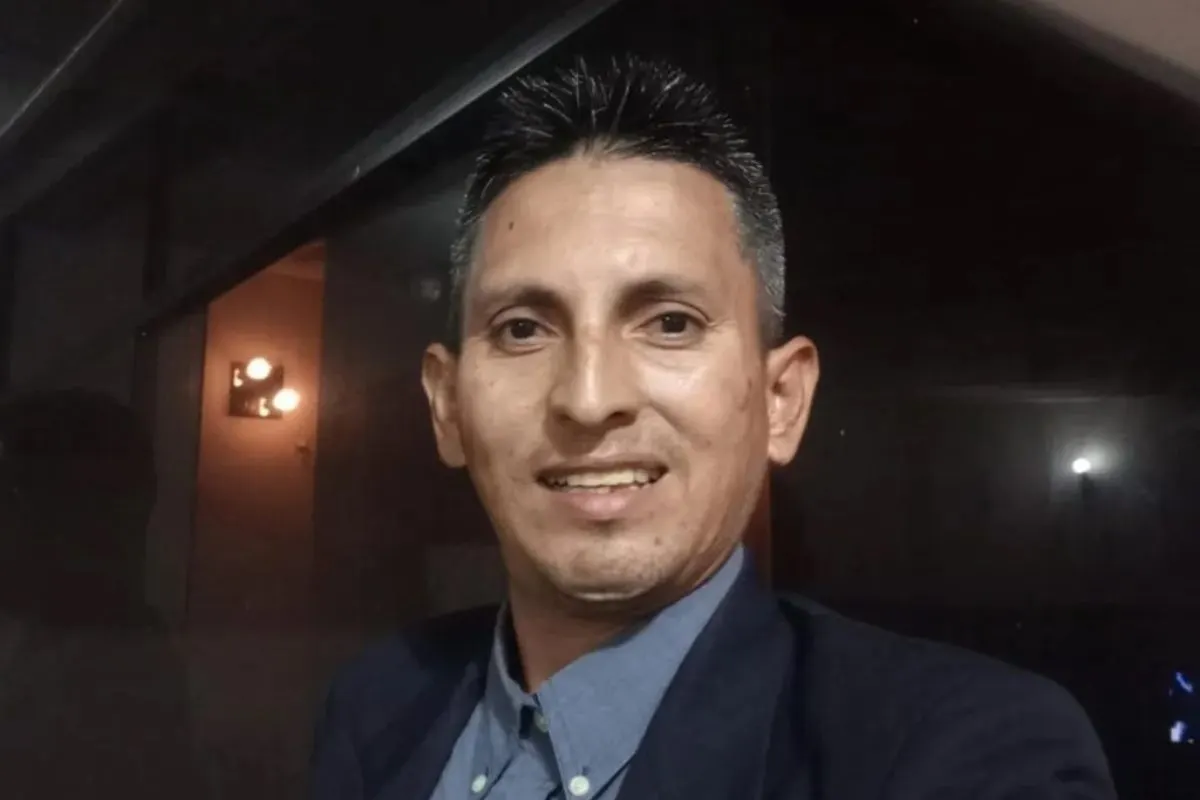
Every time Angely La Cruz says goodbye to him, she feels that something inside her stays behind in El Helicoide. The hug lasts seconds, but the emptiness the goodbye leaves stays with her for days. She has visited him several times since, at last—two months ago—she was allowed to do so. Even so, the pain does not let up: that place has nothing to do with Carlos Azuaje’s struggle. It was not made for someone like him.
The last thing Carlos said to her while free was “take care, my love.” He hugged her as always, unhurried, with that tender gesture she never imagined would be the last in freedom. That night—December 18, 2024—he was traveling in a food truck bound for Bolívar State, as part of one of his many solidarity efforts. At a National Guard checkpoint in Anzoátegui they detained him. Six months have passed since then. And his life—the life of both of them—took a turn they still cannot come to terms with.
“These have been six months in which life changed completely for us, in which the plans we had changed direction,” she says.
Carlos Azuaje, an engineer, Voluntad Popular activist and advocate of national production, was accused of terrorism by Nicolás Maduro’s regime. No one has publicly explained what the charges consist of. Nor has any evidence been presented. Since his arrest he has been held in El Helicoide, without access to private defense counsel. For Angely, the cruelest part has been witnessing how the State violates one right after another, while she can only hug him in silence and pray that he does not break.
Social fighter
Carlos was born 40 years ago in Trujillo, but his story is deeply rooted in Barinas, especially in Sabaneta, Hugo Chávez’s birthplace. There, Carlos went from being a technician at the Ezequiel Zamora Sugar Agroindustrial Complex (CAAEZ) to becoming a whistleblower. He exposed acts of corruption that directly involved figures of chavismo. In 2016, his allegations served as the basis for the National Assembly to open an investigation. A few months later, he was fired from CAAEZ. They accused him of conspiring.
He did not stop. With a notebook, a camera and his social media, he began recording citizens’ complaints, environmental problems and labor complaints. He was often seen on María Corina Machado and Edmundo González’s tours, arriving a day early in each city to prepare the coverage. He is a man of deep convictions who found in Voluntad Popular a space to defend them. “Carlos is a dreamer, a supportive, hospitable comrade, a great friend,” says Angely. And she does not say it out of nostalgia, but from the certainty of who he is, even in prison.
During the year before his detention, he had no fixed place to live. He slept wherever he could. In Barinas everyone knew he was being persecuted. They were looking for him. They threatened him. In 2020 he denounced that orders had been given from local power to kill him. He directly pointed to the then mayor, Zenaida Gallardo, a powerful figure of the regional ruling party. He lived at risk, but he stood firm.
A story that cannot be erased
Angely does not forget the day she learned of his arrest. It was like feeling the air being torn out of her. For weeks she could not see him, or know how he was. The regime gave no answer. With every knock on the door she feared receiving bad news. Only two months later did she begin to have regular visits. “Every time I go to see him, my heart shrinks. Then the goodbye is unsettling, painful,” she says. But she also confesses that those brief encounters are her salvation. “Seeing him gives me relief, it lets me keep going.”
Carlos, she says, has not broken. He remains strong, with faith. He knows his story is not unique: it represents hundreds of political prisoners in Venezuela. Angely has also had to become strong. “This has been a difficult process, they have violated all due process,” she repeats with quiet anger. “Thinking differently is not a crime. Carlos must be free because he is innocent.”
When she hugs him before leaving, Angely thinks that place will never be able to completely lock Carlos up. Even though he is there, in a cell, without justice, he remains standing. Sometimes he tells her that he dreams of projects, of the rebirth of “Made in Venezuela,” of reactivating national production. Other days he only tells her that he loves her and to keep fighting for him.
She does. She goes to see him. She says his name. She repeats his story so they do not erase it. And although every goodbye hurts as if it were the first, she clings to the faith that it will not be the last time. That one day, at last, she will hug him without counting the seconds.