
Justices with a vision of the State
Rafael Veloz argues that the new Supreme Court justices must combine a vision of the State with technical skill, after decades in which the judiciary validated what the Constitution forbids. He presented a bill to enforce the decisions of international human rights bodies and urged qualified lawyers to apply for the bench.
Originally published by Voluntad Popular ·
Written by Rafael Veloz
Republished by Roger Quiroz ·
Read the original: voluntadpopular.com/magistrados-con-vision-de-estado-por-rafael-veloz
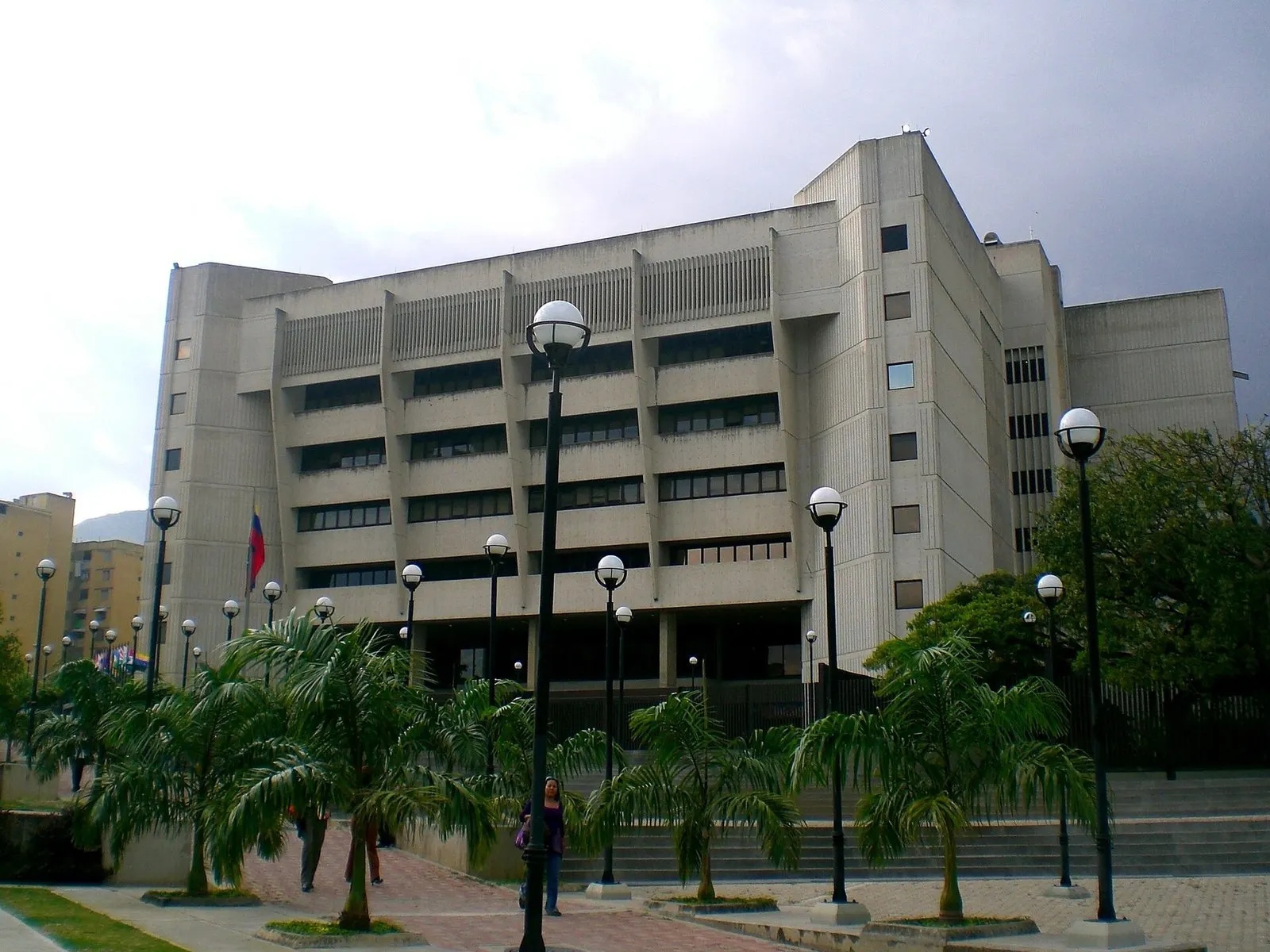
This week, at the invitation of the delegated commission that represents the 2015 National Assembly at the Dialogue Table, we went to the bicentennial Illustrious Bar Association of Caracas. The presidents of the country’s bar associations and jurists of recognized standing were there. We went on behalf of the Citizen Organization Program, under the leadership of the Confederation of Professionals and Technicians of Venezuela, CONFEPUV, and the International Broad Professional Front, FAPI, and we put forward a thesis that I want to share with readers, because it defines everything that lies ahead: to sit on the new Supreme Tribunal of Justice, it is not enough to be a good lawyer.
We must state precisely what they will be entrusted with, because from that follows what must be demanded of them.
For more than a quarter of a century, a parallel State was built in Venezuela. It was not a problem of procedural delays, disorganization or poor legal technique. It was something else: the Judiciary was hijacked and turned into the tool that validated, with an appearance of legality, what the Constitution forbids.
The examples are there for everyone to see. The Constitutional Chamber rulings of March 2017 that usurped the powers of the National Assembly elected in 2015 were not an error of interpretation: they were the annulment of one branch of government by another. The disregard of the will of the people expressed on July 28, 2024 was not a problem of evidence: it was a decision. The sustained failure to comply with the decisions of international human rights protection bodies is not an administrative delay: it is a policy. And the criminalization of dissent, with thousands of Venezuelans who have gone through political imprisonment, three hundred twenty-two still deprived of their liberty according to Foro Penal, with torture, deaths and disappearances of people in State custody, cannot be explained by a technical ignorance of the law.
All of that happened because a State terrorism was built, the interpretation of the law was replaced by political criteria and ideological slogans, and because judges, prosecutors and judicial system staff were turned into operators without independence, without job security and with no duty other than validating what was decided elsewhere, to turn it into a criminal state..
Two phases, not one
It follows that re-institutionalization has two phases and not just one, and that confusing them is the costliest mistake we could make.
The first phase is socio-legal and foundational. It has to do with the very existence of the democratic and social State of law and justice that Article 2 of the Constitution enshrines as a higher value: life, liberty, justice, democracy, social responsibility, the pre-eminence of human rights, political pluralism and the alternation of power. That phase demands from the new justices something that is not measured in an exam: a vision of the State.
The second phase is technical-legal. It is that of an administration of justice that is autonomous, impartial, transparent, effective and stable, where the rule of law governs all institutions. That phase demands knowledge, ethical training and craft, and it also demands that the State provide the Judiciary with the resources to function, because a branch without its own budget is a branch under the tutelage of whoever administers it.
Both visions must come together in the same person. That applies to the thirty-two justices and applies equally to the new Inspector General of Courts, who is the one who oversees the judges of the Republic.
Three concrete tasks
Put in operational terms, the new Tribunal will have three tasks that no Venezuelan court has fulfilled in twenty-seven years.
Preserving citizens’ guarantees, starting with reviewing the sentences handed down without an independent judge and complying with pending international decisions. Checking the other branches of government, which is its constitutional function, and eradicating the doctrine that allowed one branch to paralyze another, as happened in 2017 and in 2024. And being the shield of the results of the electoral processes ahead. This last one is the one most worth underlining: it will be of no use to organize an impeccable election if whoever must uphold its result once again twists the results on a napkin. The recent history of this country is the history of citizen victories annulled in an office.
That is why we insist that the justices must be independent and free from pressure: from political pressure, economic interest and personal convenience. It is not a moral aspiration. It is a functional requirement of the post.
A law so that the reform is substantive
At that same meeting we presented, on behalf of the social organizations that accompany us, a bill on Compliance with the Decisions issued by International Human Rights Bodies.
The initiative develops Articles 23, 30 and 31 of the Constitution and creates what does not exist today: a domestic procedure for an international decision to become an enforceable act. A coordination committee with the participation of victims and international oversight; set deadlines, of forty-five days for the compliance opinion and just five business days in the case of precautionary measures; avenues to request immediate release when an international decision orders it; a reparations fund with designated financing; and personal liability for the official who fails to comply. It also applies to decisions already issued and pending, which is where the accumulated backlog lies.
We presented this law for the reason we have been repeating all along the way: the reform has to be substantive and not a mere change of people. A new tribunal that receives the previous one’s backlog intact, without rules to enforce it, will have changed the names and kept the injustices.
And now, apply
By the time this article is published, the twelve civil society representatives would already have been appointed and sworn in to sit on the Judicial Nominations Committee. With that, the decisive stage formally begins: that of the nominations for justice.
We have shared the importance of this process in seven states of the country, and in all of them we made the same call, which I repeat here: that colleagues who meet the requirements set by the Constitution and the law apply and take part. It is not a courtesy invitation. If the best do not come forward, the country will not be able to choose them.
Venezuela needs the help of its children, inside and outside the country, to win freedom, the rule of law and institutions that work. Because in the end none of this is a debate among jurists. All of this is about people living better: about wages that are enough, public services that work, safety on the streets, schools and hospitals. A country without justice achieves none of those things, however much it promises them. A country with justice has, at last, a place to demand them.