“Don’t say the word ‘prisoner’”: The pain of a year without Superlano
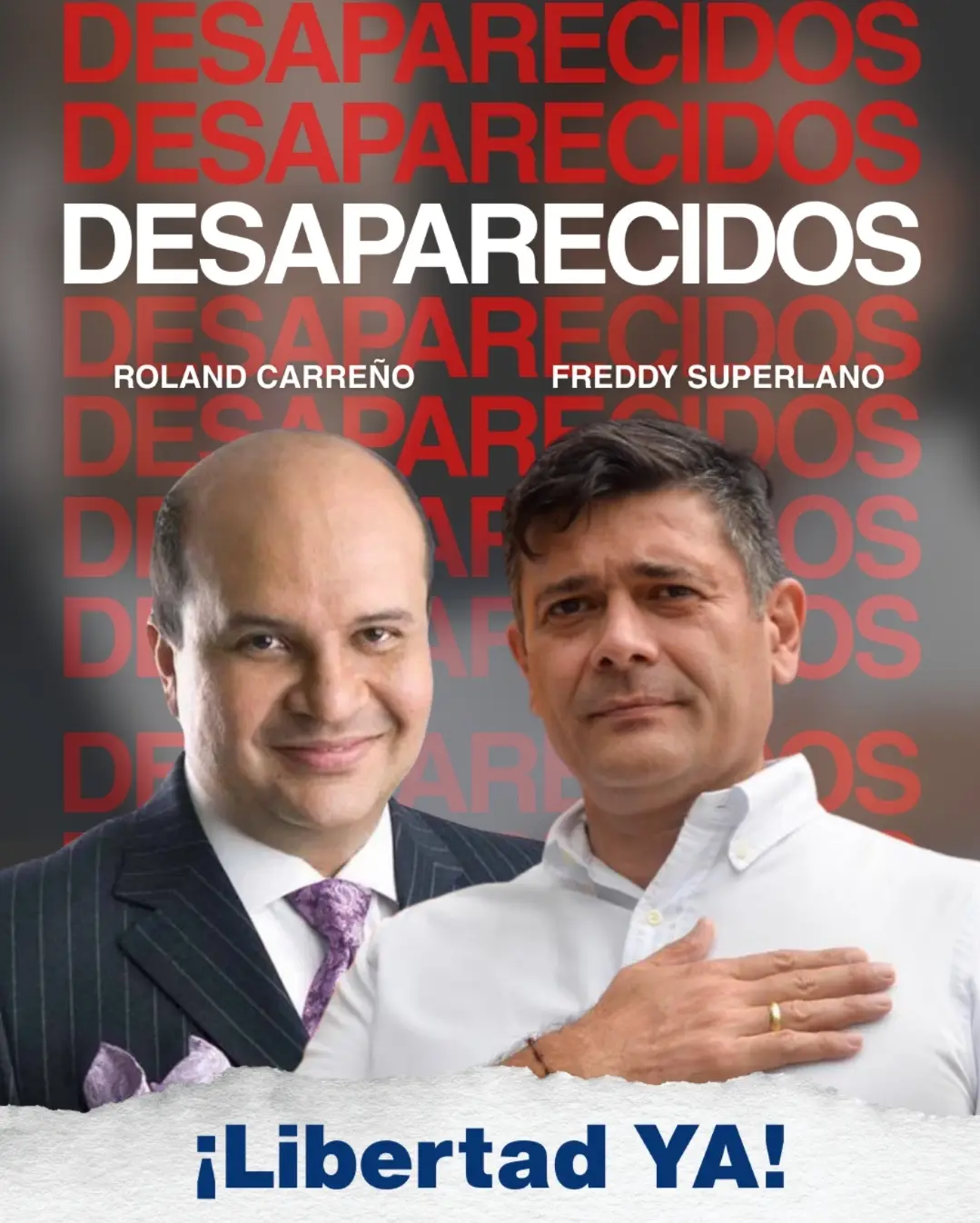
Voluntad Popular tells how the family of its leader Freddy Superlano, detained by the SEBIN on July 30, 2024, and held incommunicado in El Helicoide, has lived through a year without seeing or hearing from him.
Originally published by Voluntad Popular ·
Written by Staff, Voluntad Popular
Republished by Roger Quiroz ·
Read the original: voluntadpopular.com/no-digas-la-palabra-preso-el-dolor-de-un-ano-sin-superlano
Aurora is seven years old. And for a year now, she has erased one word from her personal dictionary: prisoner. She heard it from her mother and since then, as soon as someone mentions it, she interrupts and says: “Don’t say that word because I don’t like it. My dad isn’t a prisoner. My dad is in a place… detained, like other politicians, but that’s all.”
Perhaps she also does it to protect her younger sister, Amelia, who is four. As if, through sheer silence, she could hold back reality. As if her dad could come back sooner if no one says otherwise. As if, by not pronouncing that word, it would stop being true.
Her mom, Aurora Silva, has learned to respect the pact. To keep her composure when the girls ask about their dad. And in the solitude of the early morning hours, when there is no longer anyone to be strong for, she cries. She cries for the girl who says her dad is “in a place,” for the other who still cannot understand why he stopped calling them every day, for the man she has not seen for a year, whom she has not even been able to hear.
That man is Freddy Superlano.
The last time his wife saw him was July 28, 2024. It was the day of the presidential election. Freddy had been in hiding for weeks, but he insisted on going to Barinas, his home state, to exercise his right to vote and then go to the wake of his grandmother Mercedes, who had died the day before. At the wake, with vehicles of the Bolivarian National Intelligence Service (SEBIN) circling, he said goodbye to his wife with a kiss and told her: “See you Wednesday.”
But on Wednesday Freddy did not arrive.
On Tuesday, July 30, Aurora received a call. It was Renso, Freddy’s cousin. He was agitated, almost shouting: “The SEBIN is chasing us… They’re going to catch us.” Then: “They caught us. That’s it, they caught us.” And he hung up.
Seven days passed before Aurora officially learned that Freddy was in El Helicoide. Seven days in which he was considered disappeared. Seven days in which there was nothing but uncertainty and silence.
Since then, nothing. No calls. No visits. No proof of life, except the clothes that come out dirty and that she sends back clean. Freddy is isolated, even from other prisoners. Aurora does not know whether he has been physically tortured, although after a year in the company of other women relatives of political prisoners and human rights defenders, she knows that total isolation is a form of psychological torture.
Freddy’s case is “very heavy,” say the officials who simply deny her the right to see him. Not even his lawyer has been able to see him. Nothing will change that, except a call from “the presidency,” the officials at El Helicoide tell her with disdain, perhaps as a taunt.
But “the presidency” has more than 900 political prisoners behind bars. Terror is its state policy.
Before her world was reduced to forbidden visits, postponed hearings and unanswered video calls, Aurora met Freddy on the street. It was 2015. She was passionate about social issues; he was already a deputy in the National Assembly. He talked about justice, about community, about changing things from the grassroots. From the first meeting Aurora admired his humanity and closeness to people. She noticed that he could show up unannounced in any community in Barinas, talk with the leaders, have a coffee, listen and build together.
That activism was part of what made her stay.
Freddy grew up in Barinas, in a home where politics was in the air thanks to his parents, both activists. At lunch they debated democracy, the economy, power. It was not a distant subject; it was part of everyday life. That is where his vocation was born: not to command, but to transform.
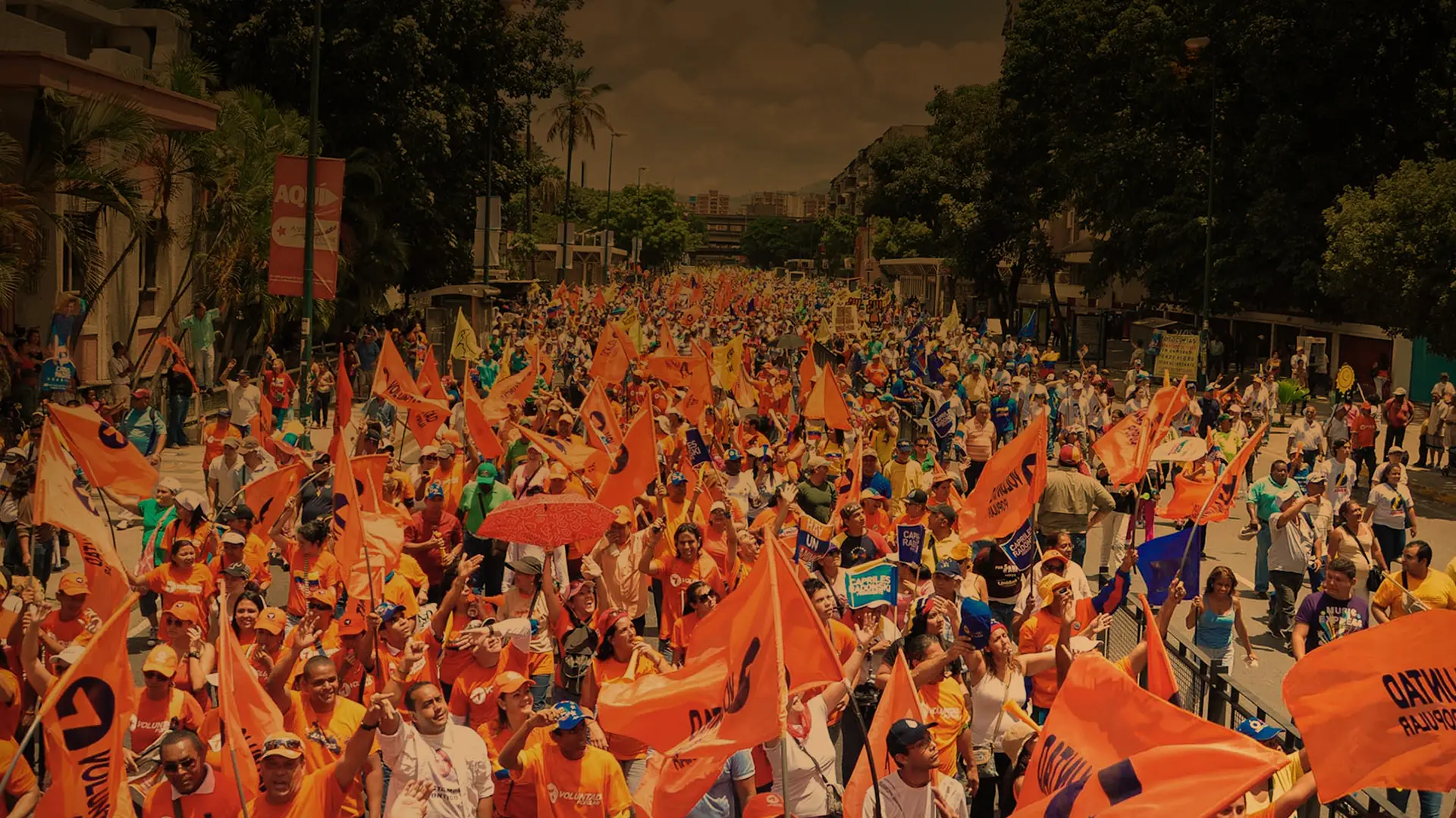
In 2009, when Voluntad Popular was not yet a political party but a citizens’ movement, Freddy was one of the first to raise its banner in Barinas. He did so in a state where chavista hegemony seemed indestructible.
Over time, his name stopped belonging only to the plains and began to be heard in other corners of the country. He visited hamlets in Zulia, markets in Anzoátegui, schools in Mérida. He listened. He took notes. He promised little, but spoke with the firmness of someone who knows what it costs to walk every meter of road. That consistency, say those who accompanied him, is what made him a national figure. He did not seek to impose himself; rather, he sowed. And with patience, he reaped the fruits.
Adriana Pichardo, currently VP’s deputy coordinator, saw him up close during the darkest years. When exile, prisons and persecution loomed over the Voluntad Popular family, Superlano insisted on getting up early to organize tours, open party offices, rebuild. She admires him for that unshakable faith, for that way of his of turning politics into something like a family cause. He was driven by a vocation that did not fade even on the worst days.
His leadership, Adriana says, came from work, from traveling the country, from contact with people. That is how he became a kind of compass for Voluntad Popular, just when they needed it most. He did it from Barinas, and he did it without asking for anything in return. That is why, when the regime persecuted him—when in 2021 they snatched away the governorship he had won at the ballot box, ending the hegemony of the Chávez family—Superlano chose not to shut himself away in resentment. He stood firm, not out of calculation, but out of conviction. And that is how he allowed an option of the democratic forces to prevail in Barinas.
Because, deep down, that is what defines him: a man who believes that politics is useless if it is not born of love for the land one walks on. A democrat through and through, Adriana describes him.
And it is precisely that vocation and that conviction for the freedom of Venezuela, she adds, that made a regime that does not understand democratic principles go after Superlano.
In Barinas, the family routine was shattered. The video calls died out. The improvised history lessons at midday came to an end. The girls, who did not understand the word prisoner, began to feel its weight without needing to hear it. They began to cry, to pray, to ask whether justice exists. They began to make drawings in which their dad appears at home, once again, sitting at the table, telling stories about the Liberator or about democracy.
Aurora, the mother, divides her time between Caracas and Barinas. Between defending her husband and caring for her daughters. Between firmness and heartbreak. Between raising her voice and keeping silent so as not to hurt. Sometimes, when she hears her older daughter say that her dad is not a prisoner, she forces herself to believe her. To repeat it inside like a mantra, perhaps so it will come true: he’s not a prisoner, he’s not a prisoner, he’s not a prisoner.
Freddy Superlano is not a criminal, as the Prosecutor’s Office says. Nor is he a terrorist or a traitor to the homeland. Aurora says so. The country knows it. The regime knows it. He is a politician. A teacher. An insatiable reader. A father who never goes to sleep without leaving his daughters a lesson. He is the man who, even knowing he was being watched, decided to stay in Venezuela.
In the books that Aurora gets to him—more than forty in a year—Freddy seeks comfort and resistance. And perhaps also a bridge. A way to go on being that dad who teaches through words, even though the word that weighs most at home is the one that cannot be said.
Perhaps one day little Aurora will say it again. Not with fear or pain, but with the relief of having overcome it. Perhaps, instead of avoiding it, she will say out loud: “My dad was a political prisoner. But he isn’t anymore.” Perhaps that day will come soon, as her dad has dreamed of and fought for over the years.
And that day, the word “prisoner” will stop being a taboo, to become a healed scar. One that no longer hurts. One that is looked at only to remember what memory, dignity and struggle are made of.