Those who are not forgotten do not die: The story of Edmundo ‘Pipo’ Rada
Voluntad Popular recounts the life of Edmundo “Pipo” Rada, its community leader in Petare, who disappeared on October 16, 2019, and was found burned and shot, a killing the party and his family attribute to his political activism.
Originally published by Voluntad Popular ·
Written by Staff, Voluntad Popular
Republished by Eyleen Valiente ·
Read the original: voluntadpopular.com/no-muere-quien-no-se-olvida-la-historia-de-edmundo-pipo-rada
The phone rang again and again, but no one answered.
Tadeo looked at the screen, dialed again, and the silence grew heavier with each attempt.
The day before, they had met in Los Cortijos, at the office where the team of the Municipal Activist Team (EMA) of the Sucre municipality, Miranda state, always gathered. It was Tuesday, and as they did every week, they had gone over the visits to the communities, the pending projects, the next outreach day in Caucagüita.
“See you early tomorrow, Pipo,” Tadeo told him as they said goodbye.
“All right, brother, see you there,” he replied, smiling as always.
But on Wednesday, October 16, 2019, Edmundo “Pipo” Rada never arrived.
At first, Tadeo thought he was running late. Then he started calling. Once, twice, three times. No one answered.
He tried to focus, not to alarm his colleagues, but something inside him tightened.
“Pipo always lets you know,” he thought. “If he doesn’t answer, it’s because something is wrong.”
The hours began to weigh like stones.
And while the phone remained silent, Tadeo felt —without knowing how— that this time there would be no way to go and rescue him.
Before politics called him a leader, Pipo was already the older brother who defended everyone.
In La Vega de Petare, where they grew up, the doors of their house were never closed. Every day neighbors came looking for help, a doctor’s appointment, a solution. His mother, Nelly Josefina, worked almost her whole life at the Sucre mayor’s office. She had a gift: making her home an extension of the municipal office. Amid cups of coffee, papers and overlapping voices, she taught her four children that serving was not a heroic gesture, but a way of life.
“She taught us that you cannot turn your back on someone who is suffering,” Tadeo recalls.
Pipo grew up in that neighborhood bustle, amid improvised meetings and pots of soup. He was restless, caring and, at times, a fighter. At school he defended his siblings; in the street, he mediated between neighbors; and if something seemed unfair to him, he said so without fear. He had that mix of character and tenderness that would later make him a leader.
One afternoon, in the El Tanque neighborhood, he stopped a machine that was going to destroy a community plot of land. The Sucre mayor’s office, under Carlos Ocariz’s first administration, had sent a crew to build a soccer field without consulting anyone. Pipo climbed onto the tractor, took the key from the driver and shouted:
—No one does anything here without asking.
The neighbors came out in his defense. The police arrived too, but what remained of that day was the unity of the neighborhood. The action forced the mayor’s office to consult the residents about the project. Several proposals came out of that day: Pipo’s was a youth baseball field. The idea won by a landslide. The field was built.
But that time, more than a public work, a way of understanding power was born: from the bottom up, with the people.
He came to politics through Tadeo. At first, the politician was him, not Pipo. But his brother insisted that the charisma he had on the street could serve something bigger.
“He had fire with people,” Tadeo recalls.
So, almost out of brotherly insistence, they corrected a number on his ID card and signed him up for the first open, direct and secret internal elections of a political party in Venezuela: Voluntad Popular. Pipo won them in Petare.
He did not yet see himself as a leader, but he already was one.
The turning point came one morning at the Universidad Metropolitana, when he heard Leopoldo López speak about La mejor Venezuela: a country where all rights would be for all people, where freedom would not be a privilege. Those were the words he needed to hear to understand, as Tadeo always told him, that social work had to go hand in hand with politics. Then there was no turning back: He devoted himself to training, to giving shape to the party, to defending Leopoldo from the persecution of the chavista regime. He fell in love with the party. And so it was until his last breath, Tadeo says.
Around those years, Adriana Pichardo, current political coordinator of Voluntad Popular, met him at a social outreach day in his beloved Petare. She always remembers him surrounded by people, dedicated, smiling, without distinguishing between political and community work. He came from years of organizing community soup kitchens, of listening before acting, of understanding needs from the inside.
That experience, Adriana says, was what shaped him as a leader: his leadership had been born in the street, amid the needs of his people.
Pipo also carried his protective side into his way of doing politics, alongside his party brothers. In the 2014 protests, Adriana recalls, he was one of those who looked after everyone, especially the women. He looked for places to take cover, calmed them down, encouraged them to hold out against the brutal repression at the demonstrations.
Over time, he became the closest face of Voluntad Popular in Petare. He was not an office politician. He was the man of firm words and an easy smile, the one who showed up when the State did not. His dream was simple and enormous at the same time: a Sucre municipality with services that worked and a decentralized mayor’s office.
“Why do people have to go all the way to Petare to get something done?” he used to say. “If the government doesn’t get there, we do.”
That stubbornness about being where power was not made him beloved by his people, but it also made him uncomfortable for those who could not stand his way of doing politics: from the bottom up, with the people and for the people, always with democracy and freedom as his banner.
On October 15, 2019, Tadeo and Pipo met as they did every Tuesday at the EMA Sucre headquarters. When they said goodbye, they agreed to see each other the next day. “See you early tomorrow,” he told him. But at dawn, the messages were left on read, the calls unanswered.
At nine in the morning on October 16, his phone was busy. At ten, as well. At noon, Tadeo began calling everyone: Luis Somaza, Roland Carreño, the party colleagues. “Don’t sound the alarm yet,” they told him. But he knew. “If Pipo were doing something else, he would have told me.”
The afternoon turned into anguish. Neighbors, party members and friends began arriving at the office where they worked together. They organized groups to search for him: hospitals, police stations, morgues. Nothing.
In Petare word began to spread: “Pipo is missing.”
At night it was raining hard. At the Petare roundabout, Tadeo approached the FAES post. He asked whether there was a detainee named Edmundo Rada. The officer looked at him and let out a phrase that still haunts him:
—Go look for your dead man somewhere else.
Tadeo went through half of Caracas without results. At home, his mother called him nonstop: “Find him, please, find him.” But that time he could not.
On the morning of October 17, Adriana Pichardo received a call. She still remembers it: It was 6:45 am. It was Tadeo.
—Pipo has been missing since yesterday. He didn’t come home to sleep. We are very worried. Help me find out if he’s been arrested, to see what happened to him.
Adriana listened to him in silence. Inside, something churned. For years she had accompanied cases of political persecution, arbitrary detentions and enforced disappearances. She knew how that emptiness felt, the one fear leaves when it becomes certainty. She felt a weight in her stomach, a premonition she preferred not to name. Something told her that Pipo was not alive.
At dawn that Thursday, Tadeo returned to the office. He had not slept. He met with the same colleagues as the day before, the ones who already knew every number to call, every place to ask. They split up again: some went to hospitals, others to the police lockups. He tried to stay calm, but inside something had broken. “He’s gone,” he thought. He didn’t know why, but he felt it in his body, like a stabbing pain in his chest. He stepped aside for a moment, sat down on a sidewalk and cried in silence.
Then he dried his face, took a deep breath and kept going. He went with two colleagues to the Fundamental Rights Prosecutor’s Office to file the complaint. That morning they began contacting the media, telling them that Pipo was missing, that something terrible had happened. The whole party mobilized. From then on it was all running, insisting, waiting.
Then Tadeo received another call.
They told him that a burned body had been found in Guaicoco. They asked him to come, because they would only show the body to a direct relative.
When he arrived, a cloth covered the body.
“Are you ready to see?” an official asked him.
He was not, but he nodded.
The body was burned. It had bruises, fractures, and two gunshot wounds behind the neck. When they tried to lift it, a leg came off.
“It was my brother,” he managed to say. And the world stopped.
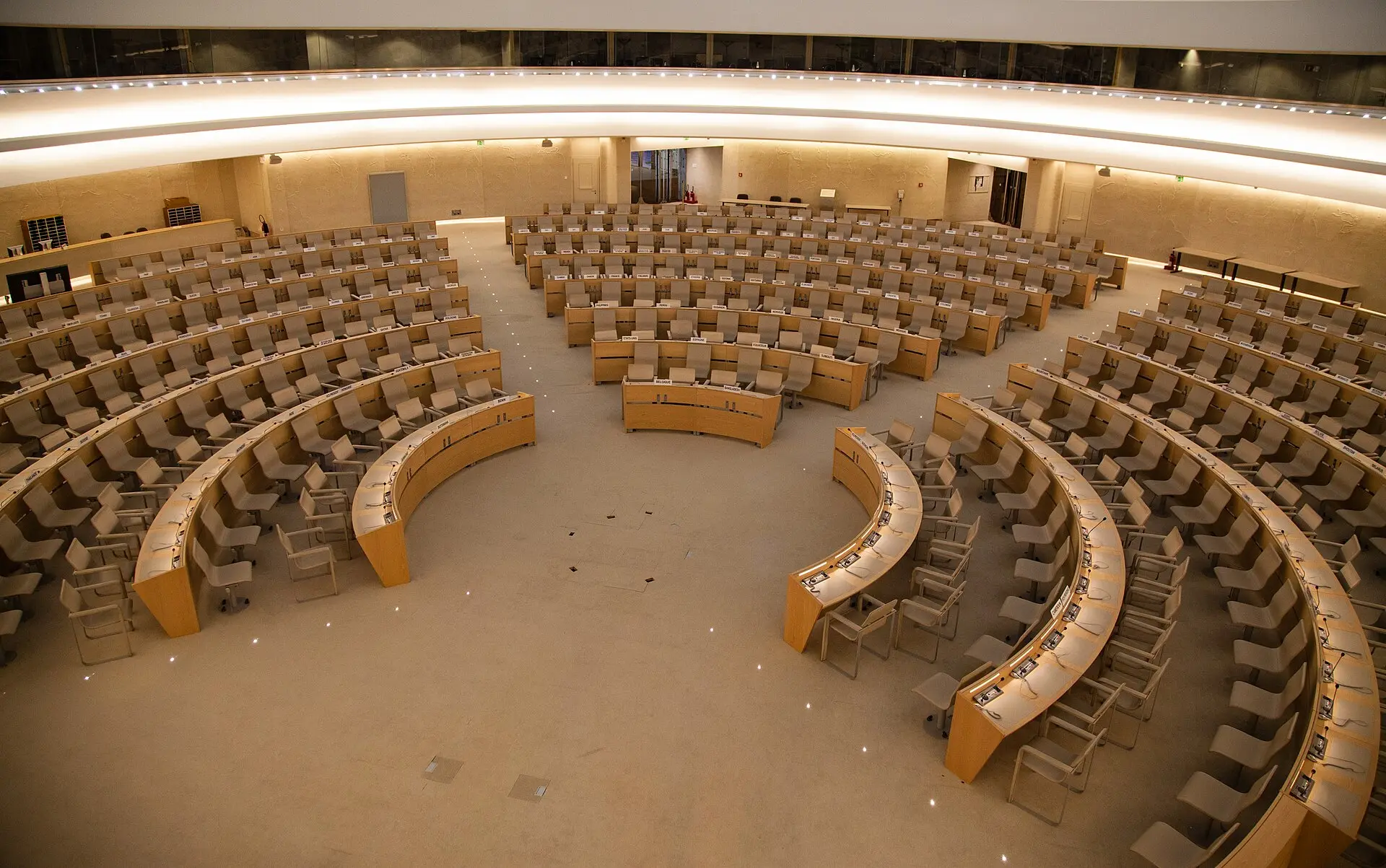
Pipo had been executed. They killed him on the same day that Venezuela was being elected as a member of the UN Human Rights Council.
Nicolás Maduro’s regime tried to disguise the crime as a “crime of passion.” But the family had no doubt. Even today, six years after his death, no one doubts it: Pipo was murdered for his political activism, for his voice, for his work with the people.
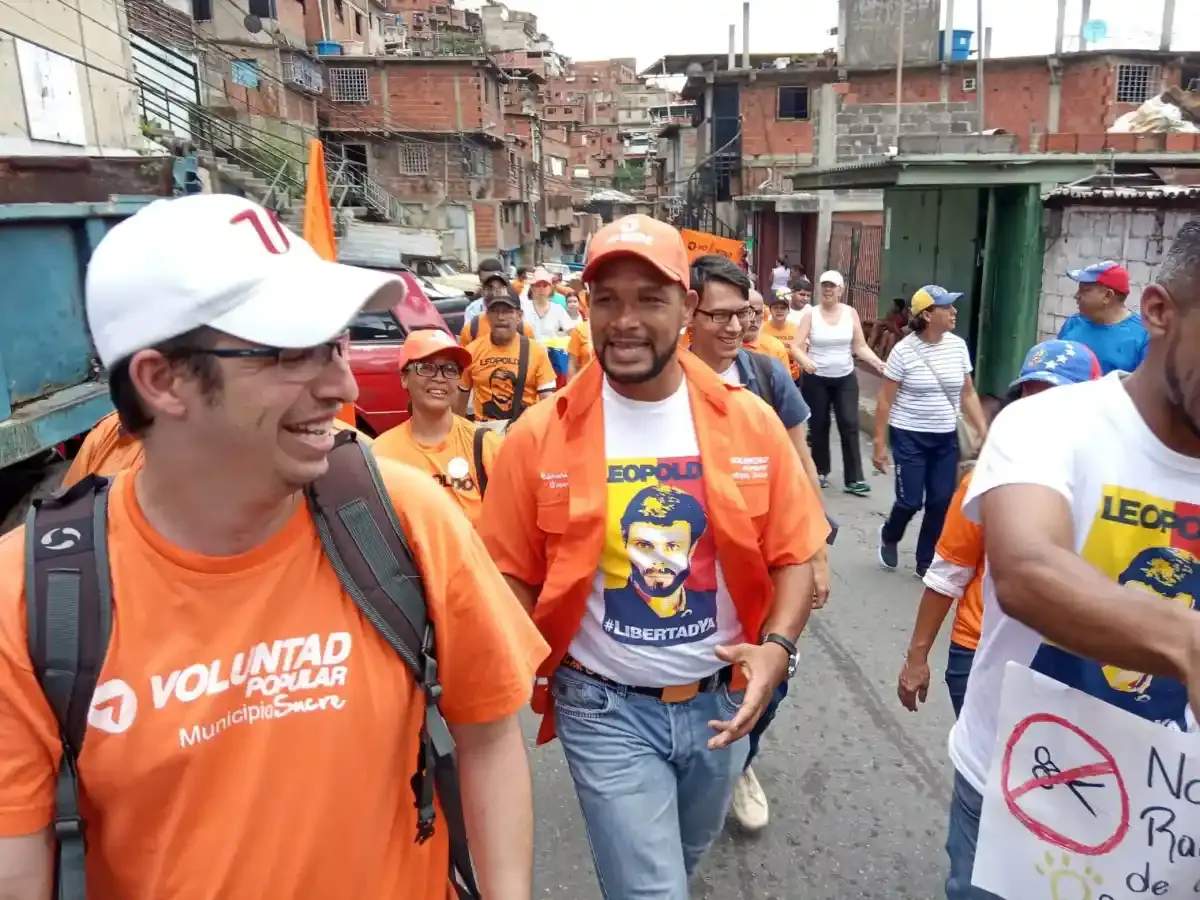
The signs are clear: days before his disappearance, Pipo had completed a task that for him represented an enormous challenge. He had organized and accompanied a walk through Petare by the interim president, Juan Guaidó. The walk was emotional and vibrant: neighbors waving, party members accompanying, the energy of the people reflecting the hope for change that Pipo always sought. For him, it was a moment of pride and also of risk; Adriana recalls that that day marked, without his knowing it, an end point in his path. As so many times before, he had defied the system, he had taken steps forward for truth, for democracy, for freedom. That effort and that courage defined him until the last moment of his life.
But his murder also sent a message. For Voluntad Popular, Pipo’s death was a cruel and direct blow, a reminder of the fear the regime could instill. The first hours after the news were filled with pain, outrage and fear, Adriana recalls: how far could they go?
However, as the hours passed, the memory of his strength became strength for those who knew him, she says. The conviction to carry on, to honor his life and his struggle, overcame the terror the regime sought to impose.
Then came the silence.
The Sunday gatherings became ceremonies of absence. Pipo’s mother, Nelly Josefina, was never the same again. She died a year and a half later, of sorrow.
But time did not erase Pipo.
His name lives on in the streets of Petare, in the neighborhood murals, in the children who play baseball on the field he helped rescue.
Today, every time Tadeo passes through those same hillsides, he hears his voice in the alleys, amid the bustle of the neighborhood. And he tells himself: Those who are not forgotten do not die.
That is why Pipo is more alive than ever.