Zulia State academies issue statement on Venezuela's current sociopolitical situation
The academies of history, economic sciences, and legal and political sciences of Zulia State said on January 28, 2025, that the January 10 swearing-in of Nicolás Maduro breached the Constitution and electoral laws, and called on Venezuelans to uphold the Constitution.
Originally published by VenAmérica ·
Written by Academias de Historia, Ciencias Económicas y Ciencias Jurídicas y Políticas del Zulia
Republished by Roger Quiroz ·
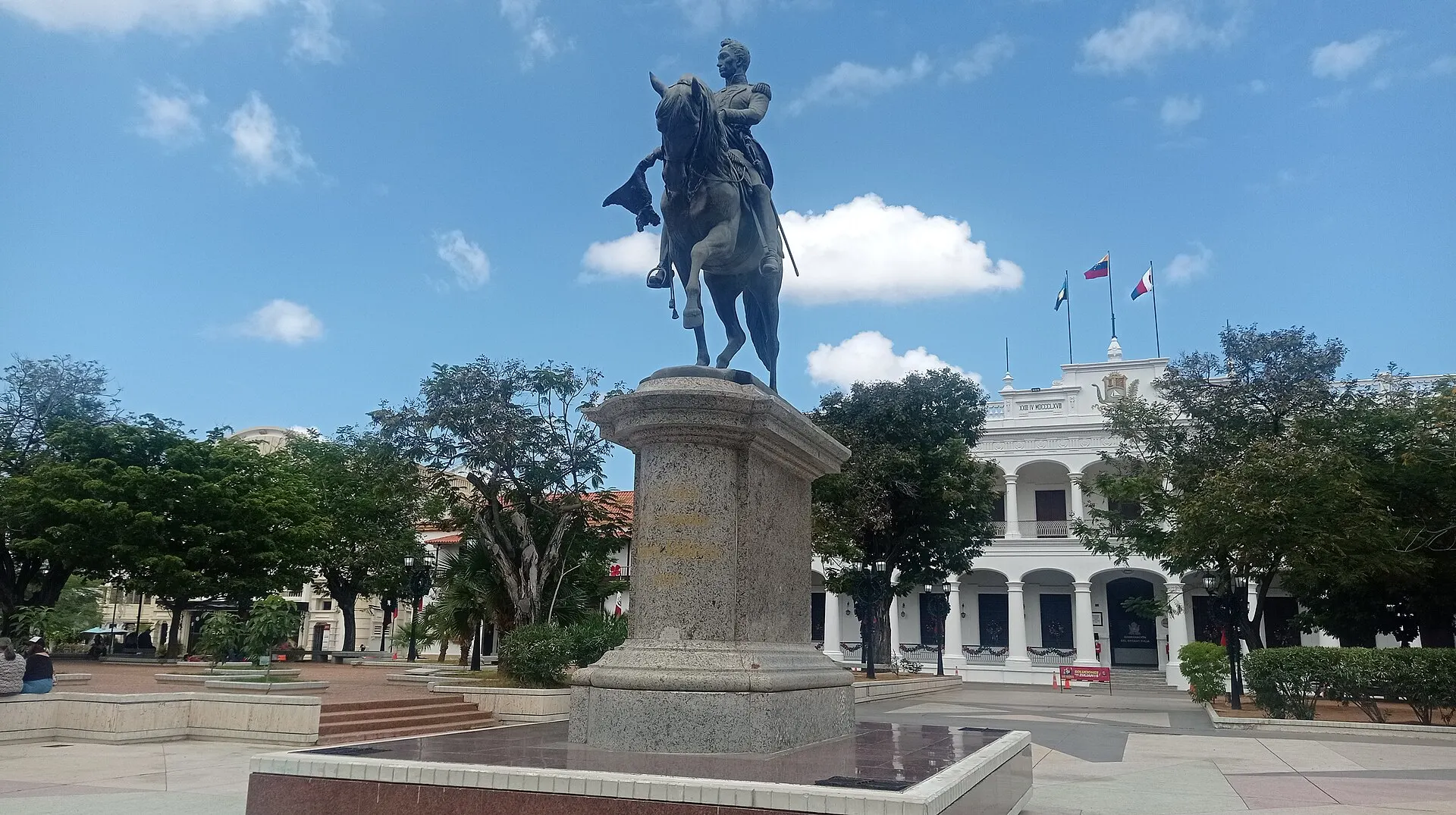
The Academy of History of Zulia State, the Academy of Economic Sciences of Zulia State and the Academy of Legal and Political Sciences of Zulia State, in the interest of always contributing to the shaping of opinion and social correction, informing and alerting citizens and the organs of public power about statements, actions or omissions contrary to our sociohistorical reality or to the legal and moral values and principles enshrined in the Constitution and the laws of the Republic, and being moved by the current sociopolitical situation of Venezuela, issue this statement in the following terms:
- The political history of Venezuela has not been free of conflict-ridden electoral junctures, some of which have had turbulent consequences as a result of the arbitrary interference of power. First, we will mention the presidential elections of September 1, 1897, whose main candidates were Ignacio Andrade, for the Yellow Liberal Party (in power since 1870 and of a militaristic, caudillo-style bent), and José Manuel Hernández, for the Nationalist Liberal Party (doctrinaire, scientific and civilian in character). The electoral campaign, unprecedented at the time because of Hernández’s modern strategies, had the guarantees of then-president Joaquín Crespo, but the popularity of the main rival led the government to use violent mechanisms on election day: the seizure of polling places by armed peasants, preventing opposition representatives from being present at the electoral bodies, the use of forced conscription, and repeated voting by intimidated peasants. That is how the ruling-party candidate obtained 406,610 votes and the main opposition candidate 2,203, with the former proclaimed winner and president for the 1898-1902 term. This result was rejected by Hernández and his party, who denounced the fraud, the repression against their supporters and the government’s closing off of peaceful avenues of resolution, which led to the Queipa Revolution (1898) in which, although the rebel opposition was defeated, Crespo also died, protector of the now-president Andrade, who in the end, unprotected and weakened, would succumb to the Liberal Restoration Revolution (1899), which gave way to the tyrannies of Cipriano Castro and Juan Vicente Gómez.
- Second, we will describe the elections of November 30, 1952, held to elect the deputies of the National Constituent Assembly, in which the Unión Republicana Democrática (URD) party won a resounding victory with 1,198,000 votes, defeating the Frente Electoral Independiente (FEI), the party of the governing Junta, which obtained 403,000 votes. The Junta immediately refused to recognize the results. Worth highlighting is the brave stance of the then-president of the Supreme Electoral Council (CSE), Vicente Grisanti, who rejected the government’s refusal to recognize the results and resigned –along with 11 other members of the CSE– and then sought asylum in the Embassy of Brazil. It was then that the Ministry of Defense –headed by Marcos Pérez Jiménez– intervened and, appointing a new CSE board headed by José Salazar, fraudulently altered the results in favor of the FEI (788,031 votes) and to the detriment of URD (638,336 votes). All of this culminated in the proclamation of Marcos Pérez Jiménez as provisional president of Venezuela and the protest of Jóvito Villalba, who, appealing to the avenues of bona fides dialogue, fell into the trap that led to his arrest and exile along with several members of his campaign team.
- Third, we will recount the plebiscite of December 15, 1957, called by the government of Marcos Pérez Jiménez on the basis of popular sovereignty, instead of the electoral process required by constitutional mandate. That plebiscite, designed to decide whether or not Pérez Jiménez would be reelected, yielded a total of 2,374,790 votes for YES and 364,182 votes for NO. This result is explained by the manipulation of the elections, since public employees were forced to bring the red card (indicating NO) the day after the vote, as well as by the possibility of participation given to foreigners who had resided in the country for more than two years. The combination of collective feelings of deception, frustration and dissatisfaction, added to the earlier events of 1957, triggered the series of military rebellions and civilian demonstrations from January 1 to 23, 1958, which led to Pérez Jiménez’s departure from power.
- Fourth, we will relate the presidential elections of December 1, 1968, whose main candidates were Rafael Caldera (COPEI), Gonzalo Barrios (AD), Luis Beltrán Prieto Figueroa (MEP) and Miguel Ángel Burelli Rivas (FND, FDP and URD). The split suffered by AD a year earlier, in December 1967 –the third in its history–, seriously affected its candidacy, facilitating Caldera’s victory with 1,083,712 votes against the 1,050,806 votes obtained by Barrios: a difference of barely 30,000 votes. Burelli Rivas and Prieto Figueroa obtained 826,758 and 719,461 votes, respectively. The narrow margin between Caldera and Barrios gave rise to high tensions in the days following the elections, but outgoing president Raúl Leoni, displaying his democratic vocation, stated that he would hand over the presidency to Caldera even if he beat Barrios by a single vote. In this way, the first government resulting from the electoral victory of an opposition party emerged in Venezuela, recognized moreover by the ruling party, which entailed as a consequence the peaceful transfer of power from one party to another. This was unprecedented in Venezuelan democracy.
- Fifth, we will point to the presidential elections of July 28, 2024, whose main candidates were the incumbent Nicolás Maduro Moros (PSUV) and Edmundo González Urrutia (MUD). Those elections were marked by a succession of obstacles to the registration of the opposition candidacy and to the conduct of the campaign, despite the national government’s commitment to offer and respect the legal guarantees under the Barbados Agreement (2023). Once the elections were held, the National Electoral Council (CNE) announced Maduro Moros as the winner with 6,408,844 votes against González Urrutia with 5,326,104. For its part, González Urrutia’s camp asserts that he won the election with 7,443,584 votes against Maduro Moros with 3,385,155, by virtue of which the electoral body is called upon to disclose the tally sheets expeditiously and properly, so that citizens may know with full certainty what happened, for the sake of constitutional respect for the vote and in favor of the historic institution of democracy as the norm of state and government.
As a result of what is set out in item 5 of this statement, a wave of civic and citizen demonstrations began, to which the national government responded with excessive repression, which brought as a consequence a wave of enforced disappearances, killings and the imprisonment of more than 2,000 people, including adolescents and people in vulnerable conditions, of whom a meager number have been released under restrictive measures and a few died in prison. All this alongside the questioning of the official results by respected national and international observers and not a few democratic governments around the world. The repressive escalation described here reached its peak on January 9 and 10, 2025, in the context of the swearing-in of Nicolás Maduro Moros as President of Venezuela, questioned by numerous countries that instead recognize Edmundo González Urrutia as president-elect of Venezuela, currently in exile in the face of the threat of persecution he faced inside the country.
By virtue of the foregoing and in accordance with the legal order in force in Venezuela, we set forth the following affirmations:
a) The act of totalization entails the disaggregation of the votes at each and every voting center in the country as a precondition for adding up the results contained in all the vote-count tally sheets of the polling tables, which has not been carried out to date by the electoral body, in accordance with Articles 144 of the Law on Electoral Processes and 373 of its General Regulations.
b) The publication of the final totalization bulletin, the record of totalization, allocation and proclamation, and the supplementary totalization sheets must be made in the Electoral Gazette of the Bolivarian Republic of Venezuela, in tabulated form and within 30 days following the proclamation of the elected candidates, under Articles 155 of the Law on Electoral Processes and 395 of its General Regulations. That publication did not take place before the swearing-in. Likewise, Article 231 of the Constitution of the Bolivarian Republic of Venezuela (CRBV) establishes that the elected candidate shall take office as president on January 10 of the first year of his constitutional term, by taking an oath before the National Assembly. Consequently, in the absence of the record of totalization from the electoral body, the swearing-in was carried out in contravention of the Constitution and the electoral laws in force.
c) In view of the numerous complaints of the violation and impairment of both democratic principles and guarantees and human rights in the current context, it is necessary to reiterate the nullity of any act issued in the exercise of Public Power that violates or impairs the rights guaranteed by the Constitution and the law, so that the officials who order or carry it out incur criminal, civil and administrative liability, as the case may be, with no possibility whatsoever of justification on the grounds of superior orders (Article 25, CRBV); that personal liberty, the home and private communications are inviolable and, consequently, detention without a court order, holding the detainee incommunicado and continuing his detention in the event of release are prohibited, as are searches and interceptions of communications without court orders (Articles 44, 47 and 48, CRBV); that the enforced disappearance of persons by civilian or military authorities is expressly prohibited (Article 45, CRBV); that respect for the physical, mental and moral integrity of every individual is a human right and, consequently, the application of punishments, torture or cruel, inhuman or degrading treatment to persons, whether detained or not, is expressly prohibited (Article 46, CRBV); that the protection of the State against situations that constitute a threat, vulnerability or risk to people’s physical integrity, property, enjoyment of rights and fulfillment of duties (Article 55, CRBV), the free expression without censorship of thoughts, ideas or opinions orally, in writing or by any other means (Article 57, CRBV), and peaceful demonstration, with police action using firearms and toxic substances prohibited (Article 68, CRBV), are inalienable rights of every citizen of the Bolivarian Republic of Venezuela; and that the exercise of Public Power entails individual liability, whether for abuse or misuse of power or for violation of the Constitution or the law, adding that every official is at the service of the State and not of any faction (Articles 139 and 145, CRBV).
Finally, the Academy of History of Zulia State, the Academy of Economic Sciences of Zulia State and the Academy of Legal and Political Sciences of Zulia State call for the unity and cohesion of all Zulians and, by extension, of all Venezuelans, to uphold compliance with the Constitution of the Bolivarian Republic of Venezuela, enacted in 1999, in force and effective in its entire structure, scope and legal dimension, as well as to champion the validity of the democratic and social State of law and justice, in addition to the higher values of life, liberty, justice, equality, solidarity, democracy, social responsibility, the preeminence of human rights, ethics and political pluralism, with each citizen exercising the power to repudiate any regime, legislation or authority that contradicts or undermines them, as well as the duty to cooperate in restoring their validity, whether or not vested with authority. All this in absolute respect for our supreme law and the principles, guarantees and rights enshrined in it.
In Maracaibo, Zulia State, on the twenty-eighth (28th) day of January 2025.
ACADEMY OF HISTORY OF ZULIA STATE
ACADEMY OF ECONOMIC SCIENCES OF ZULIA STATE ACADEMY OF LEGAL AND POLITICAL SCIENCES OF ZULIA STATE