One year since the detention of a future: The story of Jeancarlos Rivas
Voluntad Popular profiles Jeancarlos Rivas, a young party activist from Vargas detained on June 14, 2024, at age 19 and held in El Helicoide, and demands his release one year after his arrest.
Originally published by Voluntad Popular ·
Written by Staff, Voluntad Popular
Republished by Eyleen Valiente ·
Read the original: voluntadpopular.com/un-ano-de-la-detencion-de-un-futuro-la-historia-de-jeancarlos-rivas
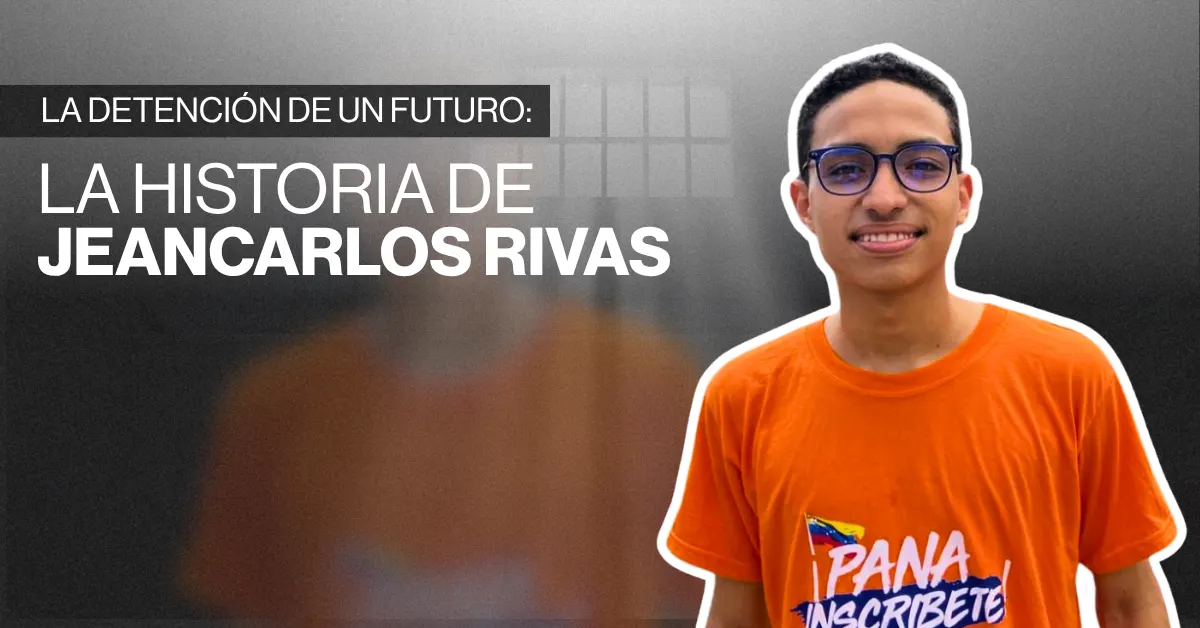
It was June 8, 2024. Jeancarlos Rivas, with his usual smile, was enthusiastically organizing the logistics to welcome to his native Vargas State the man who, to him, would be the next president of Venezuela: Edmundo González Urrutia. At least that was what he was working for, day and night if need be. The event was only a few hours away and, as usual, he was moving from one place to another, encouraging his fellow activists, rallying people on social media, fine-tuning the details.
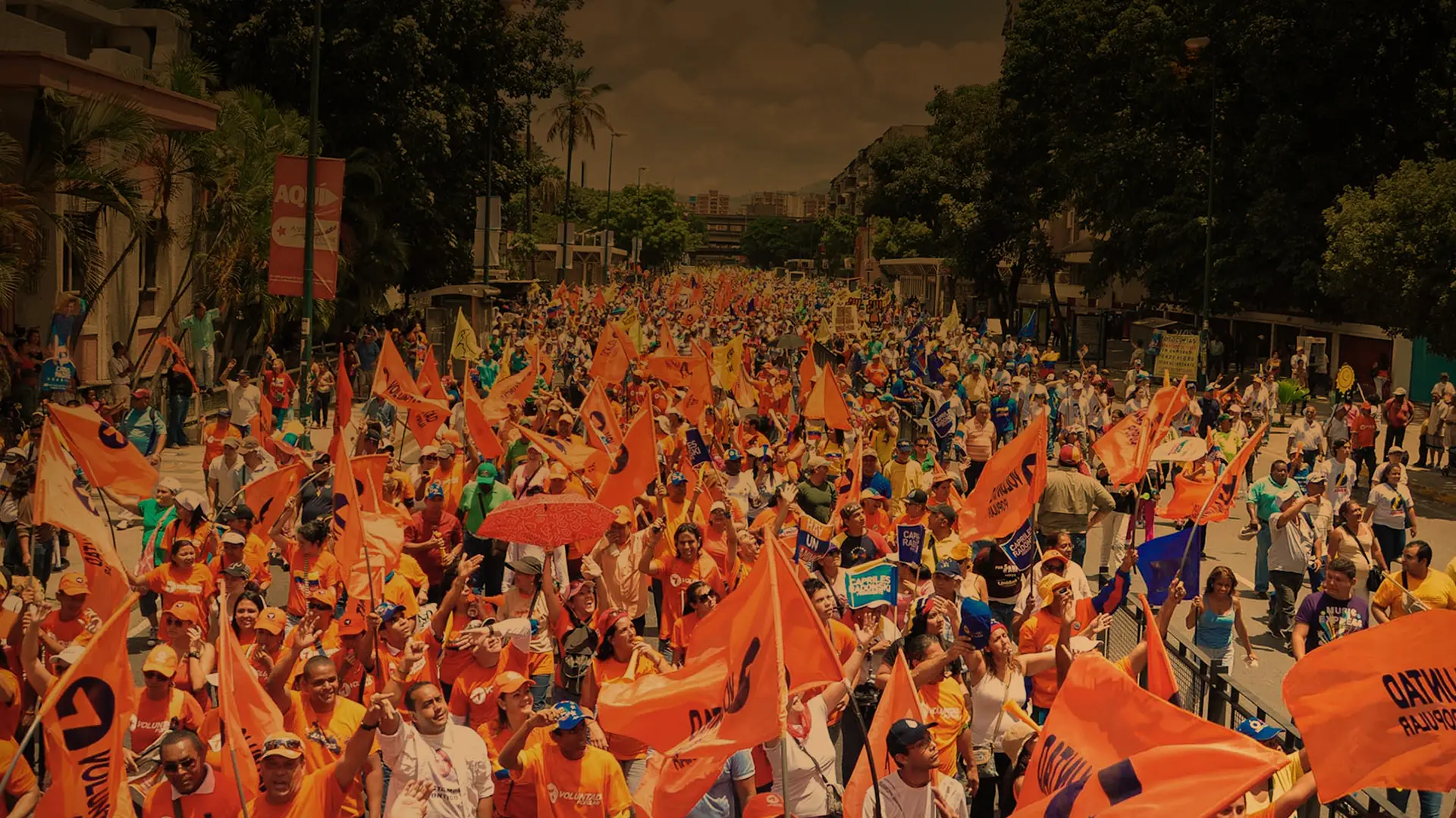
The rally was a complete success. More than 4,000 people gathered to welcome the opposition candidate, in a country that until then had seemed apathetic about politics. Everything happened peacefully: they walked a few blocks, took some photos, visited the El Mosquero Municipal Market; nothing out of the ordinary in a political campaign. At one point, Edmundo González greeted some soldiers from a Bolivarian National Guard (GNB) command post. Jeancarlos watched him from a few meters behind, waiting for the stop to end so the caravan could continue.
Six days later, on June 14, 2024, Jeancarlos was detained by officers of Nicolás Maduro’s regime. Armed officers took him away in a white pickup truck with no license plate as he was walking through the Caraballeda parish of La Guaira. Since then, he has not set foot again on the streets he had walked since he was 14 alongside Voluntad Popular activists.
Keyla López, his mother, felt a chill run through her body when she was given the news. Jhony Rivas, the party’s regional head in Vargas, burst into tears. No one could believe that Jeancarlos, a quiet kid just 19 years old, would join the growing list of the regime’s victims.
“That wasn’t a matter of detention, that was a kidnapping, because they didn’t show a warrant or identify themselves. They were armed and determined. My son didn’t even have a pen on him and they still put him in the truck,” the mother said in an interview with El Diario.
In the days following his kidnapping, the security forces sent Keyla from pillar to post. No one gave her information about his whereabouts; no one gave her any certainty. A month and a half went by like that, in the anguish of uncertainty, until she was allowed to see him again. She breathed a sigh of relief at least knowing he was alive. He was in El Helicoide.
The regime’s Prosecutor’s Office charged him with “incitement to hatred” and “terrorism” for allegedly taking part in a plan to attack the Jefatura Civil (civil registry office) of Maiquetía, the same one he had looked at from a distance during Edmundo’s visit. Since his initial court appearance, Jeancarlos has been assigned a public defender, and his lawyer, Joel García, has not been allowed to speak with him or have access to the case file.
As happens with every political prisoner, the detention upended not only Jeancarlos’s life but that of his whole family. Family life revolves around those visits to El Helicoide every Saturday, in the case of his father and his grandmother, and every Sunday in Keyla’s case. They see him, they comfort him and he comforts them, they share messages of encouragement. But the pain returns with every goodbye or when they feel the emptiness of the house without Jeancarlos.
“It’s hard to come back and have to leave him there. Whenever we go, he hugs his little brother, and when the visit ends, the boy doesn’t want to be separated from him. And I always tell him, ‘son, your brother has to stay here, we’ll come back tomorrow to get him.’ Then Jeancarlos comes out and waves goodbye to him through the window,” Keyla told El Diario.
One year later, Keyla wants to put an end to that emptiness. She wants Jeancarlos back, free. As he always should have been.
Activism in his veins
Jeancarlos was born in Carayaca, a remote parish of Vargas State, with green hills that blur into the Caribbean haze. That is where his path in politics began, not from power, but from radio: at 14 he was already hosting a salsa program and spoke with ease in front of the microphone. But it wasn’t music that drove him. It was the idea of transforming the country. He soon found a trench in Voluntad Popular and, as Jhony Rivas, the party’s regional head in Vargas, recalls, he became the soul of the mobilizations: “He was a source of motivation. He always wanted to be at the front.”
Jhony still remembers the first time he saw him. It was at an event in La Guaira. Jeancarlos took the floor, smiled at people naturally, gave a good speech; he didn’t force the words. He wasn’t afraid of the attention of the crowds. People listened to him. A born leader, Jhony thought. He was even more surprised when he told him he was 14. A child. “He could be my son,” he told himself. And from then on, in a way, he became one, in politics, in his activism in Voluntad Popular. Even today, when Jhony closes his eyes and hears Jeancarlos’s voice in his mind, he is struck by the warmth it radiates.
His party brothers describe him as someone who lived for politics, but not for office or fame. He rallied people without anyone asking him to. He attended meetings even if he wasn’t directly invited. He supported people without seeking anything in return. He regularly attended meetings with national leaders, defying fear.
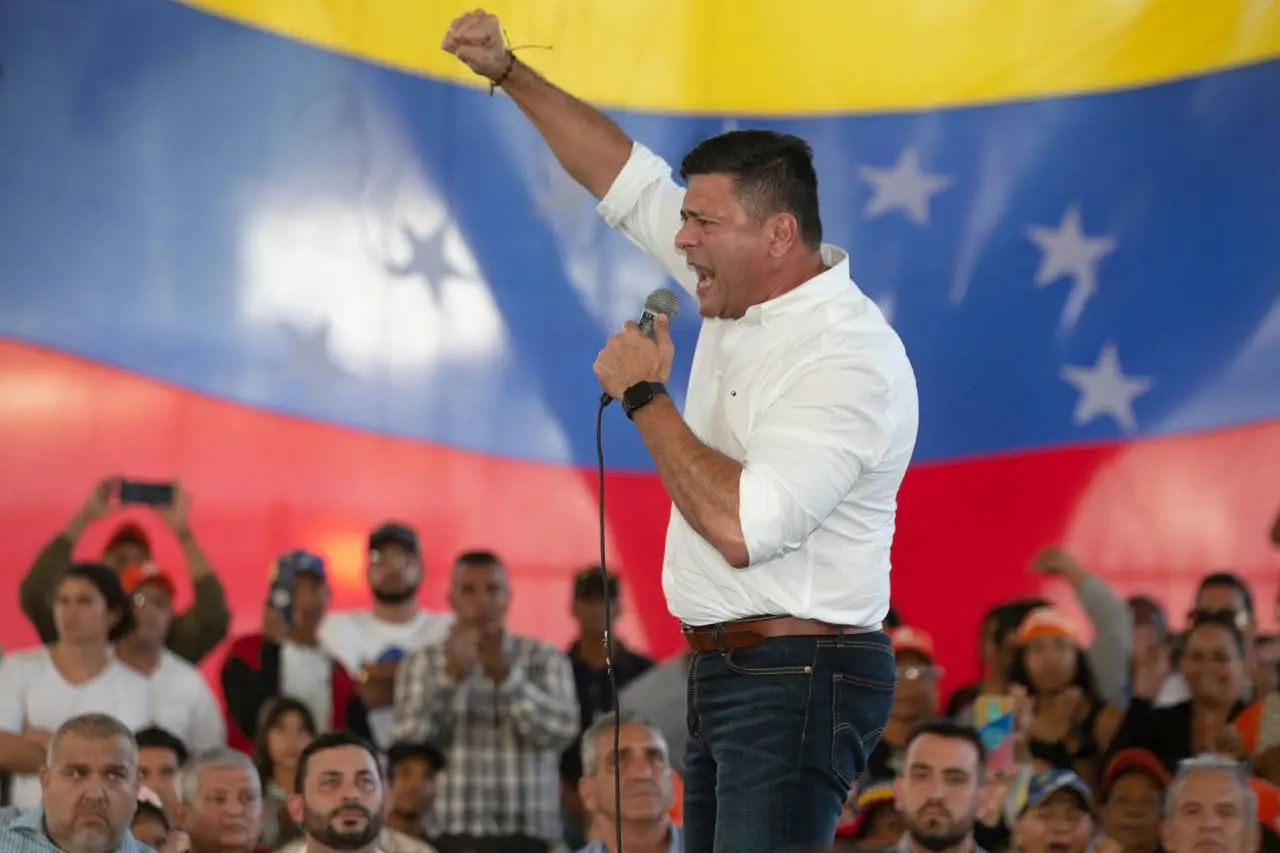
“I remember a very curious moment when Freddy Superlano came down to Vargas campaigning for the primaries and Jeancarlitos—as he calls him—was the one who always accompanied him at the front. When we left after the event was over, to Freddy’s surprise and mine, when we turned around we saw that Jeancarlos was following us. Freddy told him about the risks he was taking by walking with us, because the Sebin was following us taking photographs, but he said he wasn’t afraid, that it was his responsibility to fight for the country and that he always wanted to be with us,” says Jhony Rivas.
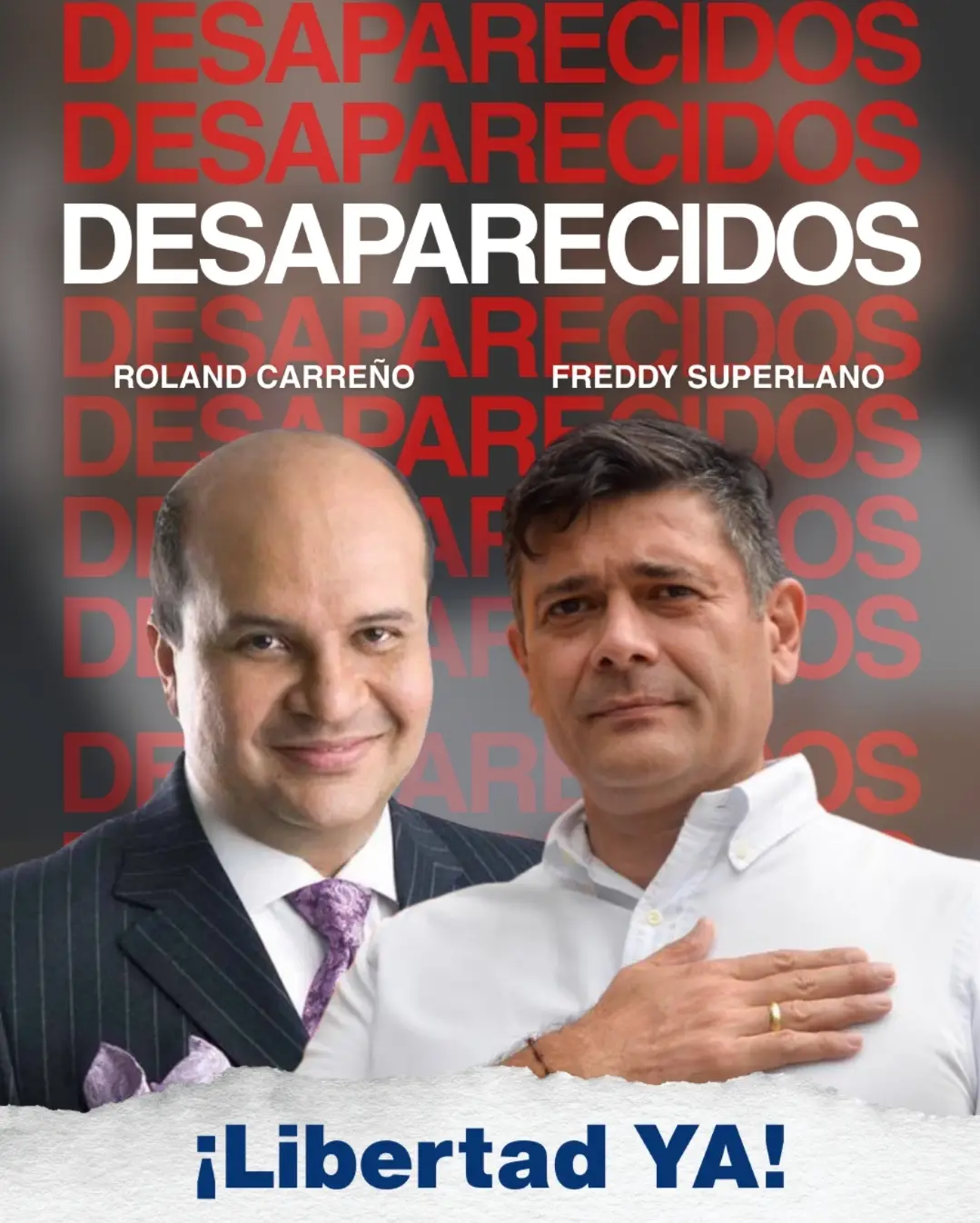
Superlano would be detained weeks later, on July 30, 2024. He too was held in El Helicoide.
With all that experience and example of activism at such a young age, Jeancarlos has already established himself as a youth role model within his party.
“Having young people like Jeancarlos Rivas in Voluntad Popular is a source of pride because he represents true democratic values. He is one of those young people who have been trained and who go out into the streets to stand with their neighbors, to do social work and to fight for freedom and for democracy,” acknowledges Adriana Pichardo, a national leader of the party.
“Jeancarlos is the symbol of the Venezuela we want, the Venezuela that is coming,” she adds.
The generation of the future
Besides political activism, Jeancarlos is passionate about communication. That is why, when he graduated from high school and turned 17, he began studying Social Communication at an institution in La Guaira, although because of the covid-19 pandemic he had to take the first semesters at home. His dream was to get a place to begin studying the degree at the Central University of Venezuela.
“Jeancarlos isn’t a boy who goes out at all. He likes to stay home and read, or spend time with family. He isn’t a boy who hangs out on the street. From the university or from church he always went home to play with his brother; if not, he was with his friends playing dominoes,” his mother describes.
Jeancarlos did not want to leave the country, even though his mother often asked him to. “I’m staying. This is my country and I have to fight for my little brother,” he often told Jhony. That is why, when talking about Jeancarlos, a recurring word among his fellow activists is “future.”
“Jeancarlos represents that generation that has never known democracy, but fights for it every day,” says Pichardo.
According to her, his detention was a calculated message from Maduro’s regime: to silence enthusiasm, to warn young people that daring to dream could cost them their freedom, to cut off the right to peaceful protest.
“The dictatorship detains a young man like Jeancarlos simply because they are the hope, they are the protagonists of the future, the ones called to finish freeing Venezuela. And not only to finish freeing it, but to consolidate the democratic system; so that the history of human rights violations, cruelty, authoritarianism and loss of values that they promoted is never repeated,” Pichardo asserts.
Jhony has no doubts about his bright future either. In politics and in life. “Jeancarlitos, once free, can achieve any goal he sets for himself in politics, not only regional but national. Jeancarlos is the future,” he maintains.
Message to Jeancarlos
Jeancarlos is one of those names that refuse to be forgotten, despite the machinery of silence. In this year of captivity, his absence has been a constant presence for brothers in the struggle like Jhony. They remember him every day, the leader says. His smile, his witty remarks, his stubbornness. For them, it is not an activist who is imprisoned; it is a son, a brother, a piece of the future who has been kidnapped.
“Jeancarlos, now that it has been a year since they have held you kidnapped in the regime’s dungeons, we want to tell you from your orange family that you are our pride, that you represent the values we fight for; that your bravery, your gallantry, your dignity and your courage will be recognized in the history of Venezuela,” says Pichardo.
Today, one year after his detention, his party demands his release with a cry that mixes anger and concern for an innocent young man: “Free Jeancarlos!”
It is not only a demand for justice; it is also an act of resistance against the oblivion his captors seek.